If you’ve received a message saying “WTW” and wondered what it means, you’re not alone. Internet slang and texting abbreviations continue to evolve, making digital conversations faster and more casual. Among the many acronyms used in chats, social media, and messaging apps, WTW is one that frequently appears in everyday conversations.
People often search for the meaning of WTW because its interpretation can vary depending on context. Whether it’s sent by a friend, a coworker, or someone on a dating app, understanding the intended meaning can help avoid confusion and improve communication.
In most cases, WTW is used as a quick way to start a conversation, ask about plans, or check what someone is doing.
This guide explains the meaning of WTW in text messages, its origins, common uses, alternative interpretations, and the best ways to respond when you receive it.
Definition & Meaning
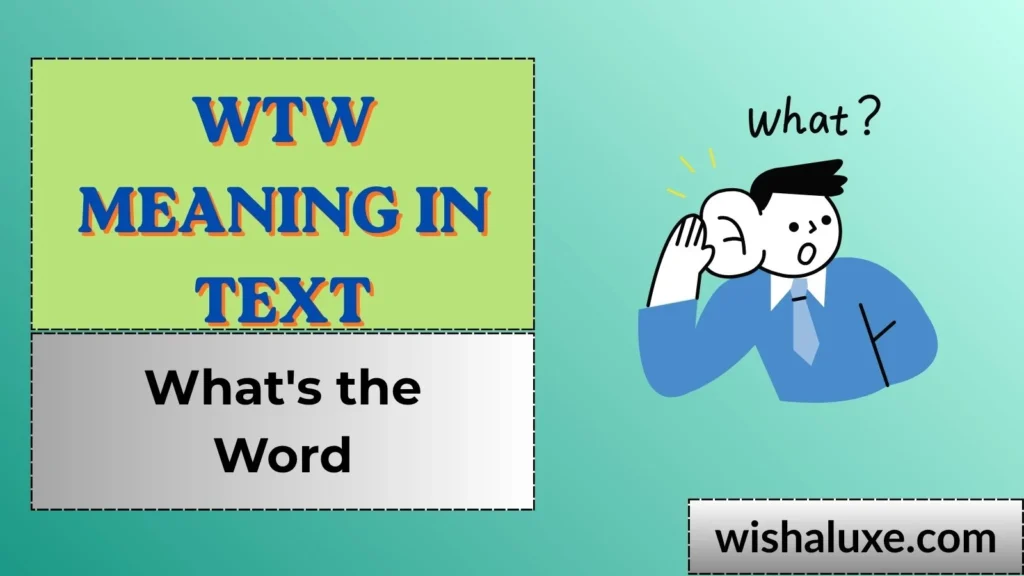
WTW most commonly stands for “What’s the Word?”
In modern texting culture, this phrase is generally used to ask:
- What’s going on?
- What’s happening?
- What are your plans?
- What’s the news?
- What are you doing?
Rather than typing a complete sentence, users shorten the phrase to WTW for convenience.
Examples
Friend: “WTW tonight?”
Meaning: “What are the plans for tonight?”
Friend: “Hey, WTW?”
Meaning: “What’s up?” or “What’s going on?”
In casual conversations, WTW often acts as a conversation starter. It invites the other person to share updates, plans, or general information.
The exact meaning depends on the context, relationship between the people involved, and the platform where it is used.
Background & History
WTW emerged from the growing trend of internet abbreviations and texting shorthand. As mobile messaging became more popular, users started shortening common phrases to save time and effort.
Similar abbreviations such as:
- LOL (Laugh Out Loud)
- BRB (Be Right Back)
- IDK (I Don’t Know)
- WYD (What You Doing)
became widely accepted in digital communication.
WTW gained popularity through:
- Text messaging
- Social media platforms
- Online gaming communities
- Group chats
- Dating apps
The phrase “What’s the Word?” itself existed long before texting. Historically, it was an informal way of asking for news, updates, or information. The abbreviation simply adapted the phrase for modern digital communication.
Today, younger users commonly employ WTW as a quick and casual way to connect with friends and acquaintances.
Usage in Various Contexts
WTW can serve different purposes depending on the conversation.
Casual Friendships
Friends often use WTW to check in or make plans.
Example:
“WTW this weekend?”
Social Gatherings
Someone may use WTW when looking for activities or events.
Example:
“WTW tonight? Anything fun happening?”
Group Chats
WTW can encourage discussion among multiple people.
Example:
“WTW everyone?”
Online Gaming
Gamers may use it to organize sessions.
Example:
“WTW? Anyone playing later?”
Dating Conversations
People frequently use WTW as an icebreaker.
Example:
“Hey, WTW?”
In this setting, it usually means “What’s up?” and helps initiate conversation naturally.
Common Misconceptions & Clarifications
Many people assume every acronym has only one meaning. However, WTW can vary based on context.
Misconception 1: It Always Means the Same Thing
While “What’s the Word?” is the most common interpretation, context matters.
Misconception 2: It Is Formal Language
WTW is informal and generally unsuitable for professional communication.
Misconception 3: It Has a Hidden Meaning Every Time
Most uses are straightforward and simply refer to plans, updates, or conversation starters.
Clarification
When uncertain, reviewing the surrounding conversation usually reveals the intended meaning.
For example:
- “WTW tonight?” = Asking about plans.
- “WTW?” = Asking what’s happening.
Similar Terms & Alternatives
WTW belongs to a larger group of conversational abbreviations.
Common alternatives include:
- WYD = What You Doing?
- WSP = What’s Up?
- SUP = What’s Up?
- HBU = How About You?
- WYA = Where You At?
- HRU = How Are You?
Each abbreviation serves a similar purpose: initiating or maintaining casual conversation.
People often choose between these terms based on personal preference and regional trends.
How to Respond to This Term
Responding to WTW is usually simple.
If It Means “What’s Up?”
You can reply with:
- “Not much, how about you?”
- “Just relaxing.”
- “Working right now.”
If It Means “What Are the Plans?”
You can answer:
- “Thinking about going out later.”
- “No plans yet.”
- “Want to grab coffee?”
If You’re Unsure
A safe response is:
“Hey! What’s up?”
This keeps the conversation moving while allowing clarification if needed.
Regional or Cultural Differences
The popularity of WTW varies across regions and age groups.
North America
WTW is widely recognized among younger users and social media communities.
United Kingdom
People may understand it, but alternative slang is often preferred.
International Users
Many non-native English speakers learn WTW through social media platforms and online interactions.
Age Differences
Teenagers and young adults are generally more familiar with WTW than older generations.
As internet culture spreads globally, understanding of texting abbreviations continues to grow across different cultures.
Comparison with Similar Terms
| Term | Meaning | Primary Purpose |
|---|---|---|
| WTW | What’s the Word? | Ask for updates or plans |
| WYD | What You Doing? | Ask current activity |
| WSP | What’s Up? | General greeting |
| WYA | Where You At? | Ask location |
| HRU | How Are You? | Ask about well-being |
Although these expressions overlap, each focuses on a slightly different aspect of conversation.
WTW is particularly useful when seeking updates, plans, or news.
Usage in Online Communities & Dating Apps
WTW is extremely common in online communities.
Social Media
Users often send WTW through:
- Instagram messages
- Snapchat chats
- Facebook Messenger
- TikTok direct messages
Dating Apps
On dating platforms, WTW often functions as an opener.
Examples include:
- “Hey, WTW?”
- “WTW this weekend?”
- “WTW tonight?”
The phrase helps start conversations without appearing overly formal.
Community Forums
Some online groups use WTW when discussing upcoming events, trends, or activities.
Its flexibility makes it suitable for many informal digital interactions.
Hidden or Offensive Meanings
In most situations, WTW is harmless and non-offensive.
However, internet slang occasionally develops niche meanings within specific communities.
While alternative interpretations may exist in certain groups, the overwhelming majority of uses simply mean:
- What’s the Word?
- What’s Up?
- What’s Going On?
Users should consider the context before assuming any unusual meaning.
Generally, there is no offensive intent behind WTW.
Suitability for Professional Communication
WTW is not typically appropriate for professional environments.
Suitable Situations
- Friends
- Family members
- Casual group chats
- Social media messages
Less Suitable Situations
- Business emails
- Client communications
- Academic writing
- Formal workplace discussions
Professional communication usually benefits from complete phrases such as:
- “How are you?”
- “Do you have any updates?”
- “What are your plans regarding this project?”
Using clear language helps maintain professionalism and avoid misunderstandings.
FAQs:
What does WTW mean in a text message?
WTW usually means “What’s the Word?” and is commonly used to ask what’s happening or what someone’s plans are.
Is WTW the same as What’s Up?
Not exactly, but they are very similar. Both are used as casual conversation starters.
What should I reply to WTW?
You can share what you’re doing, discuss your plans, or simply respond with “Not much, how about you?”
Is WTW used on dating apps?
Yes. Many people use WTW as a casual opening message to start a conversation.
Is WTW considered rude?
No. It is generally viewed as a friendly and informal abbreviation.
Can WTW have multiple meanings?
Yes. Context can influence interpretation, although “What’s the Word?” is the most common meaning.
Conclusion:
Understanding the WTW meaning in text messages can make online conversations much easier to follow. Most commonly standing for “What’s the Word?”, the abbreviation serves as a casual way to ask for updates, plans, or general conversation.
It is widely used across texting apps, social media platforms, gaming communities, and dating apps. While alternative meanings may occasionally appear, context usually makes the intended message clear.
Knowing how to recognize and respond to WTW helps improve communication and keeps digital interactions smooth, friendly, and engaging.

Hi, I’m Alex Carry, the creator of Wishaluxe. I’m passionate about helping people find the perfect words for every special occasion, from birthdays and anniversaries to celebrations and heartfelt moments. Through Wishaluxe, I share creative ideas, meaningful messages, and inspiring content designed to make every occasion more memorable. My goal is simple: to help readers express their feelings with confidence and create lasting connections through thoughtful words.