Text messaging and online communication have created countless abbreviations that help people communicate quickly. One abbreviation that often confuses users is DW. If you have received this term in a text message, social media comment, online game, or chat conversation, you may wonder what it actually means and how you should respond.
Understanding internet slang is important because many abbreviations can carry different meanings depending on the situation. While some expressions are friendly and casual, others may have specific meanings within particular communities. Learning the correct interpretation helps avoid misunderstandings and allows smoother communication in digital conversations.
The meaning of DW is generally simple and positive, but context always matters. This guide explores its definition, origin, common uses, alternative meanings, cultural differences, and whether it is suitable for professional communication. By the end, you’ll have a complete understanding of how people use DW in modern texting and online interactions.
Definition & Meaning
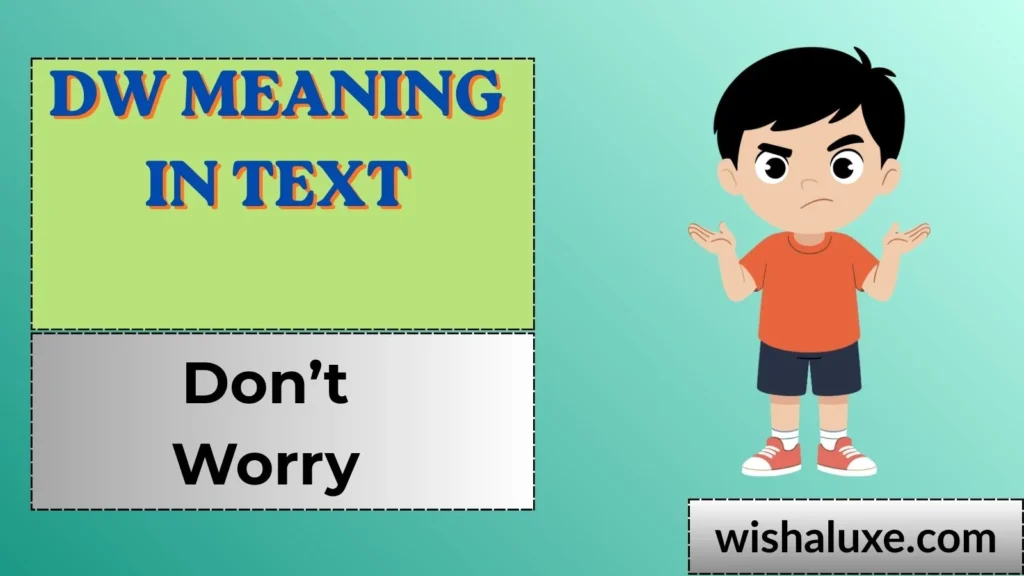
The most common meaning of DW in text is “Don’t Worry.”
People use it to reassure someone, reduce concerns, or let another person know that a situation is under control. It is a short, convenient way to express comfort and confidence during conversations.
Examples
- “DW, I’ll handle it.”
- “DW about the meeting. Everything is ready.”
- “DW, it wasn’t your fault.”
- “DW, I already completed the assignment.”
In these examples, DW acts as a calming response that removes uncertainty or stress.
Although “Don’t Worry” is the most widely recognized meaning, some communities may use the abbreviation differently. However, when encountered in ordinary texting, messaging apps, or social media conversations, “Don’t Worry” is almost always the intended interpretation.
The phrase is popular because it saves time while still conveying reassurance. Instead of typing the entire expression, users can simply type two letters and communicate the same message effectively.
Background & History
The abbreviation DW emerged during the growth of internet chat rooms, SMS messaging, and instant messaging platforms.
Early mobile phones often had character limits and small keyboards. Users developed shorthand expressions to communicate more efficiently. Similar abbreviations such as LOL, BRB, IMO, and IDK became common during this period.
As texting evolved, DW became a natural shortcut for “Don’t Worry.” The abbreviation spread through:
- SMS messaging
- Online forums
- Chat rooms
- Social networking platforms
- Gaming communities
- Messaging applications
Over time, internet culture normalized abbreviations, making them part of everyday communication. Today, DW appears across multiple generations of users and remains widely understood in casual digital conversations.
Unlike some slang terms that become outdated, DW has remained relevant because its meaning is straightforward, positive, and universally useful.
Usage in Various Contexts
DW can appear in many different communication settings.
Friendly Conversations
Friends often use DW to reassure one another.
Example:
- Person A: “Sorry I’m late.”
- Person B: “DW, I just got here too.”
Family Messages
Family members may use it to ease concerns.
Example:
- “DW, I arrived safely.”
School and Education
Students frequently use it when discussing assignments or projects.
Example:
- “DW, I’ll send you the notes later.”
Workplace Chats
In informal workplace messaging, DW may be used between colleagues.
Example:
- “DW, I’ve already updated the report.”
Gaming Communities
Gamers commonly use DW to calm teammates.
Example:
- “DW, we’ll win the next round.”
Its versatility makes it one of the most useful abbreviations in digital communication.
Common Misconceptions & Clarifications
Many people misunderstand DW because abbreviations can have multiple meanings.
Misconception 1: DW Always Means the Same Thing
While “Don’t Worry” is the dominant interpretation, context can occasionally suggest a different meaning.
Misconception 2: DW Is Rude
Some users think short abbreviations seem dismissive. In reality, DW is generally intended to be reassuring and supportive.
Misconception 3: Only Teenagers Use DW
People of many age groups use this abbreviation. It is common among students, professionals, parents, and online communities.
Misconception 4: DW Is Formal
Despite its popularity, DW remains an informal expression best suited for casual communication.
Understanding the surrounding conversation usually removes any ambiguity.
Similar Terms & Alternatives
Several expressions communicate a meaning similar to DW.
Common Alternatives
- No worries
- It’s okay
- Don’t stress
- It’s fine
- No problem
- All good
- Relax
- Everything’s okay
- You’re good
- Not a big deal
Each alternative offers reassurance while varying slightly in tone.
For example, “No worries” sounds casual and friendly, while “Everything’s okay” may feel more direct and comforting.
How to Respond to This Term
When someone sends DW, your response depends on the conversation.
Possible Responses
- “Thanks!”
- “I appreciate it.”
- “Good to know.”
- “That’s a relief.”
- “Glad to hear that.”
- “Okay, thank you.”
Example
Person A: Sorry I forgot to call.
B: DW.”
A: Thanks for understanding.
Since DW is usually intended positively, responding politely is often the best approach.
Regional or Cultural Differences
The meaning of DW generally remains consistent across English-speaking countries.
In the:
- United States
- Canada
- United Kingdom
- Australia
- New Zealand
DW is widely understood as “Don’t Worry.”
However, usage frequency may vary depending on age groups, digital habits, and familiarity with internet slang.
Some cultures prefer complete sentences rather than abbreviations, especially in professional settings. Others embrace shorthand communication extensively.
Despite these differences, the reassuring nature of DW remains largely universal.
Comparison with Similar Terms
DW shares similarities with several popular texting abbreviations.
| Term | Meaning | Purpose |
|---|---|---|
| DW | Don’t Worry | Reassurance |
| NVM | Never Mind | Dismiss a topic |
| IDC | I Don’t Care | Indifference |
| TBH | To Be Honest | Introduce honesty |
| IDK | I Don’t Know | Express uncertainty |
| BRB | Be Right Back | Temporary absence |
Unlike IDC, which can sound indifferent, DW usually creates a supportive and positive tone.
Usage in Online Communities & Dating Apps
Online communities frequently use DW to maintain friendly conversations.
Social Media
Users often respond with DW when someone apologizes or expresses concern.
Online Forums
Community members may use it while offering help or advice.
Dating Apps
On dating platforms, DW helps create a relaxed atmosphere.
Example:
- “DW, being nervous on a first date is completely normal.”
Because dating conversations often involve uncertainty, reassurance can make interactions more comfortable and natural.
Hidden or Offensive Meanings
In most situations, DW has no offensive meaning.
However, internet slang evolves constantly, and niche communities occasionally create alternative interpretations. These meanings are usually uncommon and highly dependent on context.
For everyday texting, social media messaging, and online chats, users should assume DW means “Don’t Worry” unless there is clear evidence suggesting otherwise.
As with any abbreviation, understanding the surrounding conversation helps determine the intended meaning.
Suitability for Professional Communication
DW is generally considered informal.
Appropriate Situations
- Casual workplace chats
- Team messaging platforms
- Friendly colleague conversations
Less Appropriate Situations
- Formal emails
- Business proposals
- Academic papers
- Professional reports
- Official correspondence
Instead of DW, consider writing:
- “Please don’t worry.”
- “There is no cause for concern.”
- “Everything has been taken care of.”
- “The issue has been resolved.”
Using complete phrases often creates a more professional impression.
Psychological Impact of Reassuring Text Abbreviations
Digital communication often lacks facial expressions, tone of voice, and body language. Because of this, simple abbreviations that provide reassurance can have a surprisingly positive effect on conversations. When someone receives a comforting response after expressing concern, it can reduce anxiety and prevent misunderstandings. Short expressions like DW help create a sense of support without requiring a lengthy explanation. In fast-paced online interactions, this kind of reassurance keeps conversations friendly and productive.
Why Short Text Slang Continues to Grow
The popularity of texting abbreviations reflects the modern preference for speed and convenience. People communicate through smartphones more than ever before, leading to the widespread adoption of shorthand expressions. Users often choose abbreviations because they save time while still conveying the intended message. As communication platforms continue to evolve, concise language remains an important part of digital culture. This trend explains why many internet abbreviations stay relevant for years.
Situations Where the Meaning May Be Misunderstood
Although many texting abbreviations have commonly accepted meanings, confusion can still occur. Different generations, regions, and online communities may interpret certain terms differently. Someone unfamiliar with internet slang could misunderstand the intention behind a message. In professional or formal environments, abbreviations may appear unclear or overly casual. Taking context into account helps ensure accurate interpretation and prevents unnecessary confusion.
How Context Changes the Interpretation
Context plays a major role in determining the meaning of abbreviations. The same letters may carry different meanings depending on the conversation, platform, or audience. Reading the surrounding messages often provides clues about the sender’s intent. A reassuring response after an apology, for example, clearly suggests a supportive meaning. Understanding context is one of the most important skills for navigating online communication effectively.
Examples of DW in Everyday Conversations
Real-life examples make it easier to understand how the abbreviation functions naturally. A student might use it when helping a classmate who missed notes from a lecture. Friends may use it after someone apologizes for arriving late. Family members often send it when reassuring loved ones about travel plans or daily concerns. These examples show how the expression fits smoothly into ordinary conversations without sounding forced.
The Role of Abbreviations in Modern Digital Language
Internet slang has become a recognized part of everyday communication. Abbreviations help people exchange information quickly while maintaining engagement in conversations. They also reflect changing communication habits shaped by social media, messaging apps, and online communities. While formal writing still relies on complete sentences, digital platforms encourage more concise forms of expression. This balance between efficiency and clarity continues to influence modern language.
When It Is Better to Use Full Phrases Instead
There are situations where writing the complete phrase is more effective than using an abbreviation. Formal emails, professional correspondence, and academic communication generally benefit from clear, complete wording. Full phrases can also add warmth and sincerity when discussing sensitive topics. Choosing between shorthand and complete expressions depends largely on the audience and purpose of the conversation.
Generational Differences in Understanding Text Slang
Different age groups often have varying levels of familiarity with internet abbreviations. Younger users who grew up with texting culture may instantly recognize common shorthand expressions. Older individuals, however, may prefer traditional language or be less familiar with emerging slang. These differences sometimes lead to communication gaps, especially in mixed-age conversations. Understanding your audience helps ensure your message is interpreted correctly.
How Social Media Influences Texting Vocabulary
Social media platforms play a major role in spreading new expressions and abbreviations. Terms that begin in niche online communities can quickly become mainstream through viral content and frequent sharing. As millions of users interact daily, new communication trends emerge and evolve rapidly. This constant exposure contributes to the ongoing expansion of digital vocabulary and internet slang.
Tips for Understanding Unfamiliar Text Abbreviations
Encountering unknown abbreviations is common in online communication. Instead of guessing, it is helpful to examine the surrounding conversation and identify contextual clues. Looking at the topic being discussed often reveals the intended meaning. Asking for clarification when necessary can also prevent misunderstandings. Developing familiarity with common internet slang makes digital interactions easier and more enjoyable.
Future of Internet Slang and Messaging Shortcuts
The language used online will likely continue evolving as technology changes. New platforms, communication styles, and user behaviors regularly introduce fresh abbreviations and expressions. Some terms disappear quickly, while others become permanent parts of digital culture. The continued growth of messaging apps and social networks suggests that concise forms of communication will remain important for years to come.
Signs That an Abbreviation Is Being Used Casually
Recognizing casual language can help readers interpret messages more accurately. Informal abbreviations often appear in friendly conversations, social media posts, gaming chats, and personal messages. They are typically accompanied by relaxed language and conversational tone. Understanding these signals helps distinguish between casual communication and more formal forms of writing.
FAQs:
What does DW stand for in text messages?
DW most commonly stands for “Don’t Worry.”
Is DW a positive expression?
Yes. It is usually used to reassure or comfort someone.
Can DW have other meanings?
Occasionally, but “Don’t Worry” is the most common interpretation in texting.
Is DW appropriate for work conversations?
It can be acceptable in informal workplace chats but is not ideal for formal communication.
How do I reply when someone says DW?
Simple responses like “Thanks,” “Okay,” or “I appreciate it” work well.
Is DW used on social media and dating apps?
Yes. It is commonly used across social platforms, messaging apps, and dating services.
Conclusion:
DW is one of the simplest and most widely used abbreviations in digital communication. In most cases, it means “Don’t Worry” and serves as a quick way to reassure someone, reduce concerns, or create a positive tone during conversations.
Its popularity spans text messaging, social media, gaming platforms, workplace chats, and dating apps. While alternative interpretations occasionally exist, context usually makes the intended meaning clear.
Understanding DW helps users communicate more confidently and navigate modern online conversations without confusion.

Hi, I’m Alex Carry, the creator of Wishaluxe. I’m passionate about helping people find the perfect words for every special occasion, from birthdays and anniversaries to celebrations and heartfelt moments. Through Wishaluxe, I share creative ideas, meaningful messages, and inspiring content designed to make every occasion more memorable. My goal is simple: to help readers express their feelings with confidence and create lasting connections through thoughtful words.