If you’ve spent time texting, scrolling through social media, or chatting on dating apps, you’ve probably come across the abbreviation FT and wondered what it means. Like many internet acronyms, FT can have different interpretations depending on the conversation, platform, and context in which it appears. This flexibility often causes confusion, especially for people who are unfamiliar with online slang and texting shortcuts.
People search for the meaning of FT because they encounter it in messages, social media posts, gaming chats, and even professional discussions. Understanding the intended meaning helps avoid misunderstandings and allows smoother communication in digital spaces.
The popularity of abbreviations continues to grow as people look for faster ways to communicate. FT is one of those short forms that can represent several phrases, making context especially important. In this guide, you’ll learn what FT means, where it came from, how it’s used, possible alternative meanings, and whether it’s appropriate for professional communication.
Definition & Meaning
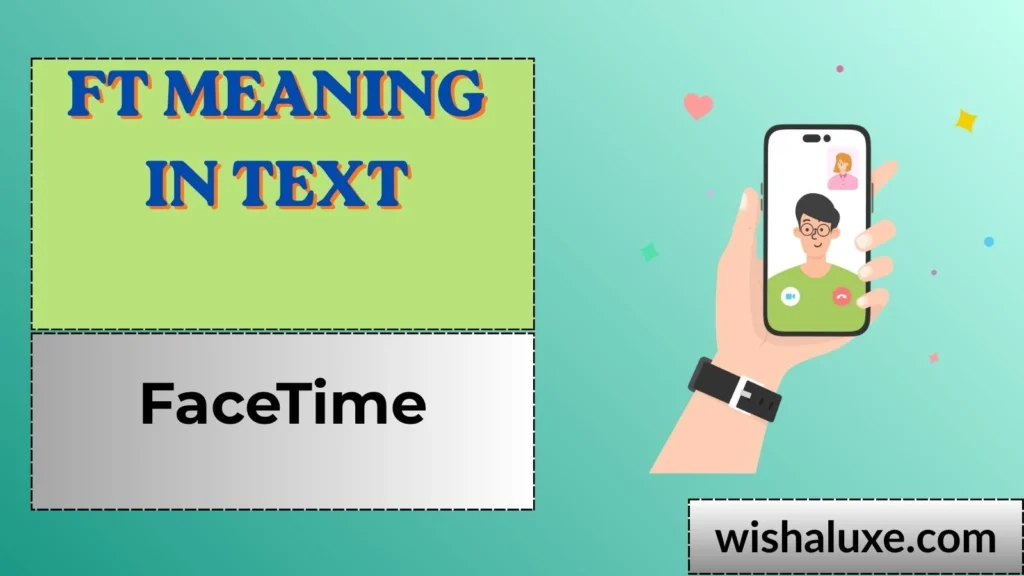
The abbreviation FT most commonly means FaceTime in text conversations. When someone says “FT me later,” they are usually asking for a FaceTime call.
However, FT can also stand for several other phrases depending on the situation, including:
- FaceTime
- Featuring
- Full Time
- Financial Times
- Feet or Foot (measurement)
- For Trade (online marketplaces)
The intended meaning is usually determined by the topic being discussed.
For example:
- “Can you FT tonight?” means “Can you FaceTime tonight?”
- “Song title FT Artist Name” means “featuring.”
- “The job is FT” means “full-time.”
- “The wall is 10 FT tall” refers to feet as a unit of measurement.
Because FT has multiple definitions, readers should pay attention to surrounding words before assuming its meaning.
Background & History
The use of FT developed alongside the growth of digital communication. As text messaging became popular, people began shortening commonly used phrases to save time and effort. Acronyms such as LOL, BRB, and FT quickly became part of internet culture.
One major reason for the popularity of FT was the rise of Apple’s FaceTime service. As video calling became a routine part of communication, many users started shortening FaceTime to simply FT in messages.
At the same time, other industries and communities had already been using FT for different purposes. Musicians frequently used it as shorthand for “featuring” when collaborating with other artists. Businesses often used FT to represent full-time employment positions.
Because these separate meanings evolved independently, FT became one of many abbreviations whose interpretation depends heavily on context.
Usage in Various Contexts
FT can appear in many different environments.
Text Messaging
In personal conversations, FT usually means FaceTime.
Example:
- “Let’s FT after dinner.”
Social Media
Users may refer to video calls or use FT when discussing collaborations.
Example:
- “New track FT a surprise guest artist.”
Employment
Recruiters and job listings commonly use FT to mean full-time.
Example:
- “Seeking FT employees.”
Music Industry
Artists often use FT instead of writing “featuring.”
Example:
- “Artist A FT Artist B.”
Gaming Communities
Gamers sometimes use FT in trading discussions or community-specific phrases.
Measurements
Architects, builders, and homeowners may use FT to indicate feet.
Example:
- “The ceiling is 12 FT high.”
Understanding the environment helps identify the correct interpretation.
Common Misconceptions & Clarifications
Many people mistakenly assume FT always means FaceTime. While FaceTime is one of the most popular definitions, it is far from the only one.
Another misconception is that FT has a hidden or inappropriate meaning in every conversation. In reality, most uses are completely harmless and practical.
Some users also confuse FT with similar abbreviations such as:
- FTW
- FTFY
- FTC
- FYI
Each abbreviation serves a different purpose and should not be interpreted interchangeably.
Whenever uncertainty exists, looking at the surrounding conversation usually provides enough information to determine the correct meaning.
Similar Terms & Alternatives
Several alternative expressions may replace FT depending on its intended meaning.
1 For FaceTime:
- Video call
- Video chat
- Call me
- Zoom
- Google Meet
2 For Featuring:
- Featuring
- With
- Collaboration
- Guest appearance
3 For Full Time:
- Permanent
- Regular employment
- Full-time position
3 For Measurements:
- Feet
- Foot
These alternatives are often used when writers want to avoid ambiguity.
How to Respond to This Term
Your response depends on how FT is being used.
1 If FT means FaceTime:
- “Sure, I’ll call you later.”
- “What time should we FT?”
2 If FT means featuring:
- “That collaboration sounds interesting.”
- “I like both artists.”
3 If FT means full-time:
- “Is the position full-time or part-time?”
- “I’m interested in a full-time role.”
4 If you’re unsure, asking for clarification is perfectly acceptable.
Examples:
- “What do you mean by FT?”
- “Are you referring to FaceTime?”
Clear communication prevents misunderstandings.
Regional or Cultural Differences
The meaning of FT can vary across countries, industries, and age groups.
In regions where FaceTime is widely used, younger people often associate FT with video calling. In professional environments, employees and recruiters may immediately interpret FT as full-time.
Music fans often recognize FT as featuring, while construction workers and engineers may think of feet as a measurement.
Cultural exposure, technology preferences, and industry-specific language all influence how people understand the abbreviation.
Comparison with Similar Terms
| Term | Meaning |
|---|---|
| FT | FaceTime, Featuring, Full Time, Feet |
| FTW | For The Win |
| FTFY | Fixed That For You |
| FYI | For Your Information |
| BRB | Be Right Back |
| IMO | In My Opinion |
Although these abbreviations may look similar, they serve completely different communication purposes.
Usage in Online Communities & Dating Apps
On dating apps and social platforms, FT most often refers to FaceTime.
Many users suggest a FaceTime call before meeting in person because it helps verify identities and build trust.
Examples include:
- “Want to FT tonight?”
- “Let’s FT before we meet.”
- “Are you comfortable with an FT call?”
Online communities also use FT when discussing collaborations, gaming trades, or group activities.
Because dating apps focus heavily on communication, FaceTime remains one of the most common interpretations in these environments.
Hidden or Offensive Meanings
Most uses of FT are harmless and non-offensive. However, internet slang evolves quickly, and some niche communities occasionally create alternative meanings.
In rare situations, FT may carry community-specific definitions that are not widely recognized by the general public.
When encountering an unfamiliar use of FT, context is essential. Instead of assuming a negative meaning, consider the conversation topic and ask for clarification if necessary.
For the majority of users, FT simply refers to FaceTime, featuring, full-time employment, or a measurement unit.
Suitability for Professional Communication
FT can be appropriate in professional communication when the meaning is clear.
Examples include:
- FT employee
- FT position
- FT schedule
However, in formal emails or official documents, writing the complete phrase is often preferable. Using the full wording reduces confusion and appears more professional.
For example:
Instead of:
- “We are hiring FT staff.”
Consider:
- “We are hiring full-time staff.”
Professional communication benefits from clarity, especially when abbreviations may have multiple meanings.
Psychological Reasons People Use Shortened Text Terms
Digital communication moves quickly, and people naturally look for ways to save time. Abbreviations and acronyms make conversations faster while reducing typing effort. Many users adopt shortened terms because they fit the informal nature of texting and social media. They also help create a sense of belonging within online communities where certain expressions become widely recognized. As communication habits continue evolving, concise language remains a practical tool for everyday interaction.
How Context Changes the Interpretation
A single abbreviation can mean completely different things depending on the situation. The surrounding words, platform, and conversation topic often provide clues about the intended definition. For example, a discussion about employment may point toward a workplace-related meaning, while a conversation about video calling suggests something entirely different. Understanding context is one of the most important skills for interpreting modern internet language accurately.
Why Internet Slang Evolves So Quickly
Online language changes faster than traditional vocabulary because millions of users contribute to it every day. Social media platforms, gaming communities, influencers, and messaging apps constantly introduce new expressions. Some abbreviations remain popular for years, while others disappear almost as quickly as they emerge. This rapid evolution reflects changing trends, technologies, and communication preferences among internet users.
Generational Differences in Understanding Digital Abbreviations
Younger generations often encounter internet slang daily and can recognize abbreviations instantly. Older users may be less familiar with newer expressions, leading to confusion when reading messages or social media posts. These differences are not necessarily about technology skills but rather exposure to modern digital communication habits. As a result, the same abbreviation may be understood differently across age groups.
The Role of Abbreviations in Mobile Communication
Smartphones have significantly influenced the popularity of shortened language. Although modern devices offer predictive text and voice typing, many people still prefer abbreviations because they make conversations more efficient. Quick responses are often expected in messaging environments, making concise expressions a practical choice for maintaining fast-paced interactions.
Situations Where Clarification Is Necessary
Not every abbreviation is immediately understandable. When a term has multiple meanings, assumptions can lead to misunderstandings. Asking a simple follow-up question can prevent confusion and ensure that everyone interprets the message correctly. Clear communication becomes especially important in professional, educational, and business-related discussions where precision matters.
How Social Media Influences Language Trends
Social media platforms act as testing grounds for new words and abbreviations. A phrase used by a popular creator can spread across millions of users within days. As people adopt and share these expressions, they become part of everyday online vocabulary. This constant exposure accelerates language development and contributes to the widespread use of shorthand communication.
Examples of Conversations Using the Term Naturally
Seeing a term in real-world examples often makes its meaning easier to understand.
Example 1
- Person A: “Are you free tonight?”
- Person B: “Sure, we can chat later.”
2
- Person A: “Did you hear the new song?”
- Person B: “Yes, the guest artist did a great job.”
3
- Person A: “Is the position permanent?”
- Person B: “Yes, it’s a full-time role.”
These examples demonstrate how the same abbreviation can take on different meanings depending on the discussion.
Common Mistakes New Internet Users Make
People unfamiliar with online slang sometimes assume every abbreviation has a single definition. Others may interpret a term based on previous experiences rather than the current conversation. Another common mistake is relying on one source without considering context. Taking a moment to analyze the discussion often leads to a more accurate understanding.
Future of Texting Abbreviations
Abbreviations are likely to remain a major part of digital communication. Even as technology improves and typing becomes easier, users continue to value speed and convenience. New platforms will introduce fresh expressions, while older abbreviations may evolve or gain additional meanings. The ability to understand these terms will remain useful for navigating online conversations effectively.
FAQs:
What does FT mean in texting?
It most commonly means FaceTime, referring to a video call.
Does FT always mean FaceTime?
No. It can also mean featuring, full-time, feet, or other terms depending on context.
What does FT mean on dating apps?
Usually it refers to a FaceTime video call before meeting in person.
What does FT mean in music?
In music, FT generally means featuring another artist.
Is FT professional to use in emails?
It can be, but writing the full phrase is usually clearer and more professional.
How can I know which meaning of FT is correct?
Look at the surrounding conversation and topic to determine the intended meaning.
Conclusion:
FT is a versatile abbreviation with several meanings across texting, social media, business, music, and everyday communication. While FaceTime is one of the most recognized definitions today, FT can also represent featuring, full-time employment, feet as a measurement, and other context specific phrases. Understanding the setting in which it appears is the key to interpreting it correctly.
As digital communication continues to evolve, abbreviations like FT remain a convenient way to communicate quickly while still conveying important information. When in doubt, asking for clarification is always the best approach.

Hi, I’m Alex Carry, the creator of Wishaluxe. I’m passionate about helping people find the perfect words for every special occasion, from birthdays and anniversaries to celebrations and heartfelt moments. Through Wishaluxe, I share creative ideas, meaningful messages, and inspiring content designed to make every occasion more memorable. My goal is simple: to help readers express their feelings with confidence and create lasting connections through thoughtful words.