In digital communication, short forms and abbreviations dominate conversations, especially in texting, social media, and chat apps. One such commonly used expression is “mhm,” which often confuses people who are new to online slang or trying to understand tone in messages.
At first glance, it may look like a random combination of letters, but in reality, it carries a simple yet powerful conversational meaning. People often search for “mhm meaning in text” to understand whether it indicates agreement, hesitation, sarcasm, or something deeper depending on context.
The meaning of “mhm” changes slightly based on tone, punctuation, and conversation flow. It is widely used across messaging platforms like WhatsApp, Instagram, Snapchat, and dating apps. Since digital conversations lack vocal tone and facial expressions, users rely heavily on such expressions to communicate emotions subtly.
Understanding “mhm” helps avoid misinterpretation and improves online communication clarity.
Definition & Meaning
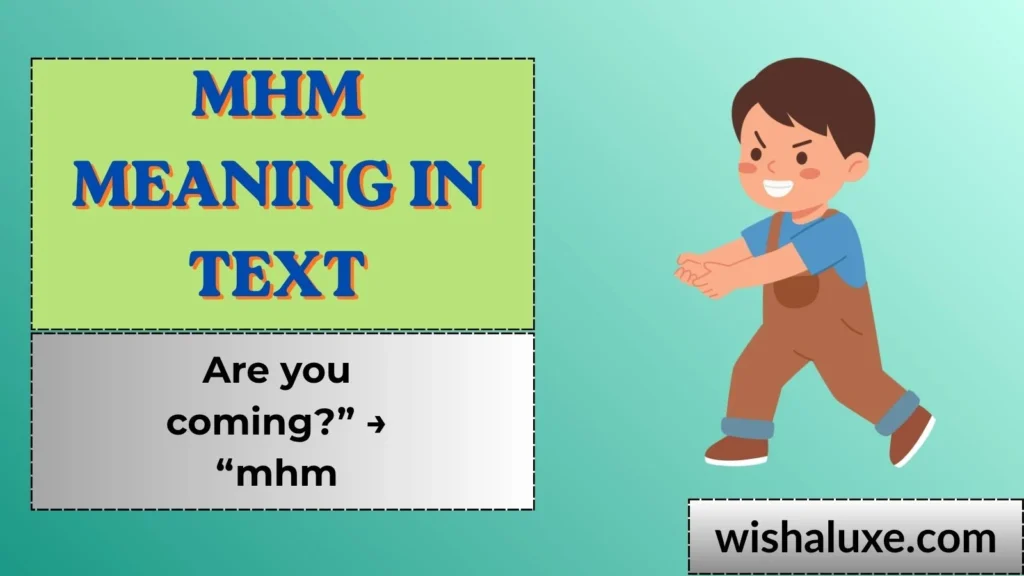
“Mhm” is an informal expression used in texting to represent a sound of agreement or acknowledgment. It is similar to saying “yes,” “okay,” or “I understand,” but in a more casual and non-verbal tone.
In most cases, “mhm” indicates:
- Agreement with a statement
- Acknowledgment of information
- Passive listening in a conversation
However, its meaning can shift depending on context. For example:
- “Are you coming?” → “mhm” (yes)
- “Did you understand?” → “mhm” (yes, I understand)
- “You’re ignoring me?” → “mhm” (can feel passive or uninterested)
Unlike formal responses, “mhm” is often short and slightly emotional in tone, making it versatile in everyday texting.
Background & History
The expression “mhm” originates from spoken English, where it represents a humming sound people make while agreeing or listening attentively. Before texting existed, people already used “mhm” in face-to-face conversations as a vocal cue.
With the rise of SMS messaging in the early 2000s, users began typing it as a written form of the sound. It became popular because it was quick to type and effectively replaced longer responses like “yes” or “I agree.”
Later, social media platforms amplified its usage. Today, it is a global texting shorthand recognized across different cultures and languages, especially among younger users.
Usage in Various Contexts
“Mhm” is highly flexible and can be used in different conversational settings:
1. Casual Conversations
Used to show agreement or acknowledgment:
- “That movie was good.” → “mhm”
2. Busy or Distracted Tone
Sometimes used when someone is multitasking:
- “Are you listening?” → “mhm”
3. Emotional or Passive Tone
Can indicate mild disinterest:
- “Do you even care?” → “mhm”
4. Friendly Agreement
Used between friends to confirm something casually:
- “Let’s meet at 5.” → “mhm”
Context is everything when interpreting this expression.
Common Misconceptions & Clarifications
Many people misunderstand “mhm” as rude or dismissive. While it can sometimes appear uninterested, it is not inherently negative.
Common misconceptions include:
- It always means sarcasm → False
- It is unprofessional in all cases → Mostly true in formal settings
- It shows annoyance → Only sometimes, depending on tone
In reality, “mhm” is neutral and depends heavily on conversation context.
Similar Terms & Alternatives
There are several alternatives to “mhm” in texting:
- “mm” (shorter version of agreement)
- “yeah” (casual yes)
- “yep” (friendly confirmation)
- “ok” / “okay” (neutral agreement)
- “right” (acknowledgment)
Each variation carries slightly different emotional tones, but all serve similar communication purposes.
How to Respond to This Term
Responding to “mhm” depends on the situation:
- If it shows agreement: Continue the conversation normally
- If it feels passive: Ask follow-up questions
- If it seems uninterested: Change the topic or re-engage
Example:
- “mhm” → “Got it, what do you think about it?”
This helps keep the conversation active and clear.
Regional or Cultural Differences
“Mhm” is widely understood across English-speaking regions, but tone interpretation varies:
- In Western countries: Often seen as casual agreement
- In South Asian chats: Sometimes considered dismissive
- In professional environments: Rare and usually avoided
Despite cultural differences, the core meaning remains consistent—acknowledgment or agreement.
Comparison with Similar Terms
Compared to other expressions:
- “Yes” = formal and clear
- “Yeah” = casual and friendly
- “Mhm” = neutral, emotional, or passive
“Mhm” stands out because it reflects tone more than meaning. It is less about the word itself and more about how it feels in conversation.
Usage in Online Communities & Dating Apps
On platforms like Instagram, Snapchat, and dating apps, “mhm” is commonly used to:
- Show short responses in chats
- Indicate passive interest
- Avoid long conversations
- Maintain casual tone without commitment
In dating conversations, however, it can sometimes signal low interest if overused, so interpretation is important.
Hidden or Offensive Meanings
“Mhm” does not have any direct offensive meaning. However, it can indirectly feel:
- Passive-aggressive
- Emotionally distant
- Dismissive in arguments
The perception depends entirely on how and when it is used.
Suitability for Professional Communication
In professional or formal communication, “mhm” is generally not recommended. It may appear unprofessional or unclear.
Better alternatives include:
- “Yes”
- “I understand”
- “Noted”
- “Agreed”
Using clear language ensures better communication in workplace settings.
Psychological Interpretation of “Mhm” in Conversations
The way “mhm” is used can reveal subtle psychological cues. In communication psychology, short responses like this often indicate minimal cognitive engagement or a desire to keep the conversation flowing without investing much emotional energy. In friendly chats, it can signal comfort and ease. However, in conflict situations, it may suggest emotional withdrawal or reluctance to argue. Understanding these subtle signals helps in interpreting intent more accurately in digital communication.
Tone Variations of “Mhm” in Digital Messaging
The meaning of “mhm” changes significantly depending on tone. A simple “mhm” can feel neutral, while “mhm…” with ellipses may suggest hesitation or doubt. Repeated forms like “mhm mhm” can show stronger agreement or active listening. Capitalization and punctuation also influence perception, making tone analysis essential in interpreting messages correctly.
Role of “Mhm” in Fast-Paced Conversations
In rapid chat environments, especially group chats, “mhm” serves as a time-saving response. It allows users to acknowledge messages without slowing down the conversation flow. This makes it especially useful in multitasking scenarios where users want to stay engaged without typing full replies. Its efficiency is one of the main reasons for its popularity in modern texting culture.
Emotional Neutrality vs Emotional Distance
One interesting aspect of “mhm” is its emotional neutrality. While it can simply mean agreement, overuse may create emotional distance between users. In close relationships, frequent use of “mhm” instead of fuller responses can make conversations feel less engaging. This dual nature makes it both useful and potentially misleading depending on communication style.
Impact of “Mhm” on Relationship Communication
In romantic or close relationships, “mhm” can play a sensitive role. If used occasionally, it shows relaxed agreement. However, if used repeatedly, it may be interpreted as lack of interest or emotional detachment. Partners often read more meaning into such short responses, making context and balance very important in maintaining healthy communication.
How “Mhm” Differs from Voice Conversation Usage
In spoken language, “mhm” is a natural listening sound used to show attention. In texting, however, it loses vocal tone and relies entirely on interpretation. This difference often leads to misunderstandings because written “mhm” lacks the warmth or rhythm of spoken acknowledgment. This shift from audio to text is a key reason why its meaning can feel ambiguous online.
Generational Differences in Using “Mhm”
Younger users, especially Gen Z, use “mhm” frequently in casual chats, often without deeper intent. Older generations may interpret it as vague or even rude due to differences in communication style. These generational gaps highlight how digital slang evolves and how meaning can shift across age groups.
“Mhm” in Group Chats and Social Dynamics
In group conversations, “mhm” often functions as a filler acknowledgment. It helps users participate without dominating the discussion. However, if used excessively by one person, it may signal disengagement. Group chat dynamics often influence how such short responses are perceived by others.
Influence of Autocorrect and Predictive Text on “Mhm”
Modern keyboards and predictive text systems sometimes suggest “mhm” as a quick response option. This has increased its usage significantly. Because it is easy to tap, users often choose it instead of typing longer replies, which contributes to its widespread presence in casual digital communication.
When “Mhm” Becomes Passive Communication
In some cases, “mhm” acts as passive communication—responding without actively contributing to the conversation. This can happen during boredom, distraction, or lack of interest. Recognizing this pattern helps in understanding whether the other person is truly engaged or simply responding minimally.
FAQs:
What does mhm mean in texting?
It usually means yes, agreement, or acknowledgment in a casual tone.
Is mhm rude in chat?
Not always, but it can seem passive or uninterested depending on context.
Can mhm mean no?
Rarely. It mainly shows agreement, not disagreement.
Is mhm used in professional messages?
No, it is too informal for workplace communication.
Why do people use mhm instead of yes?
Because it feels more natural, quick, and conversational.
Does mhm show interest?
It can, but sometimes it shows neutral or low engagement.
Conclusion:
“Mhm” is a simple yet versatile texting expression that plays an important role in modern digital communication. While it generally indicates agreement or acknowledgment, its emotional tone depends heavily on context. Understanding how and when it is used helps avoid misinterpretation in both casual and online conversations.
Although it is widely accepted in informal chats, it is best avoided in professional communication where clarity is essential.

Hi, I’m Alex Carry, the creator of Wishaluxe. I’m passionate about helping people find the perfect words for every special occasion, from birthdays and anniversaries to celebrations and heartfelt moments. Through Wishaluxe, I share creative ideas, meaningful messages, and inspiring content designed to make every occasion more memorable. My goal is simple: to help readers express their feelings with confidence and create lasting connections through thoughtful words.