If you spend time on social media, texting apps, online forums, or dating platforms, you have probably come across the abbreviation WTM. Like many internet acronyms, it can have different meanings depending on the conversation and the person using it.
This often leaves people confused and searching for its exact definition.
Understanding modern texting slang has become increasingly important because digital communication relies heavily on abbreviations to save time and make conversations more casual. Whether you receive WTM in a text message from a friend, see it in a social media post, or encounter it on a dating app, knowing what it means can help you respond appropriately and avoid misunderstandings.
This guide explains the meaning of WTM in text, where it originated, how people use it in different situations, possible alternative meanings, and the best ways to reply.
By the end, you will have a complete understanding of this popular internet abbreviation and its role in modern online communication.
Definition & Meaning
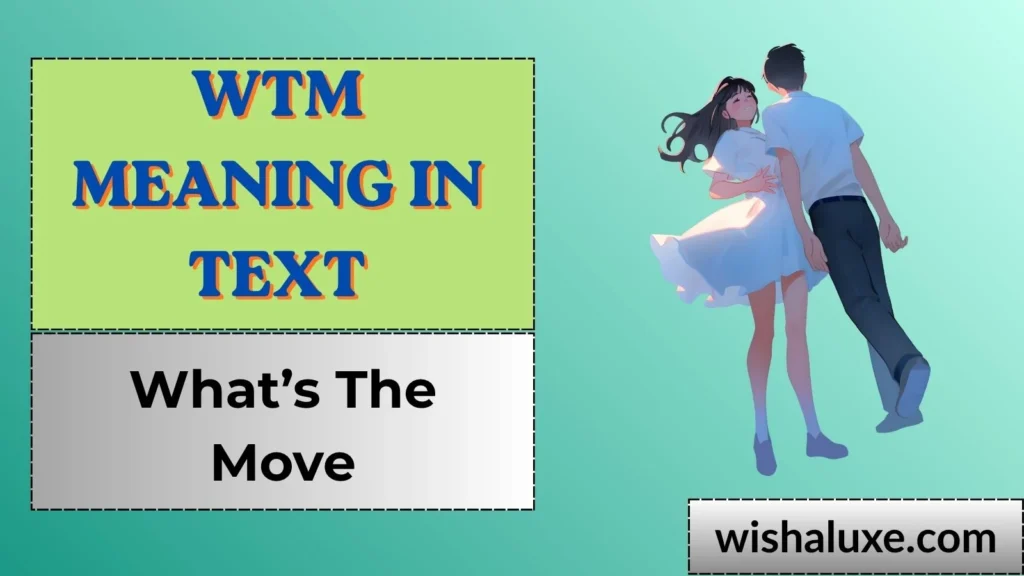
WTM most commonly stands for “What’s The Move?”
In casual texting and online conversations, this phrase is used to ask about plans, activities, or upcoming events. When someone sends WTM, they are typically asking what everyone is doing or suggesting that they would like to make plans.
For example:
- “WTM tonight?”
- “WTM this weekend?”
- “I’m bored. WTM?”
In these situations, the sender wants to know what activities are available or whether friends have any plans.
Depending on the context, WTM can also be interpreted as:
- What’s The Move?
- What’s The Matter?
- What’s The Meaning?
- Whatever That Means (less common)
However, “What’s The Move?” is by far the most widely used interpretation in modern texting culture.
Background & History
WTM emerged as part of the broader trend of internet abbreviations that became popular through text messaging and social media. As mobile phones and messaging apps evolved, users looked for faster ways to communicate common phrases.
Similar abbreviations such as:
- WYA (Where You At?)
- WYD (What You Doing?)
- WSP (What’s Up?)
- HMU (Hit Me Up)
became common in digital conversations. WTM followed the same pattern by shortening a frequently used question into three letters.
The phrase gained popularity among younger internet users, especially on platforms where quick communication is preferred. Over time, it spread from texting into social media captions, online communities, gaming chats, and dating applications.
Today, WTM is recognized by many internet users and continues to be used in casual conversations around the world.
Usage in Various Contexts
WTM can appear in several different communication settings.
Friend Groups
Friends often use WTM when discussing plans.
Example:
- “WTM after school?”
- “WTM tonight, everyone?”
The message is essentially asking what activity the group wants to do.
Social Media
Users sometimes post WTM on stories or status updates.
Example:
- “Weekend just started. WTM?”
This invites friends or followers to suggest activities.
Dating Conversations
On dating apps, WTM can be a conversation starter.
Example:
- “Hey, WTM this weekend?”
The sender may be interested in meeting up or learning about the other person’s plans.
Gaming Communities
Players use WTM when organizing gaming sessions.
Example:
- “WTM? Ranked matches or casual games?”
Group Chats
WTM is frequently used to coordinate events quickly without typing a full sentence.
Common Misconceptions & Clarifications
Many people misunderstand WTM because internet abbreviations often have multiple interpretations.
One common misconception is that WTM has a fixed meaning in every situation. In reality, context determines its meaning.
For example:
- “WTM tonight?” usually means “What’s The Move?”
- “WTM with you?” could mean “What’s The Matter?”
- “WTM does that stand for?” may imply “What’s The Meaning?”
Another misconception is that WTM is always related to parties or social gatherings. While it often refers to plans, it can also be used more generally to ask what is happening.
Reading the surrounding conversation is usually the easiest way to identify the intended meaning.
Similar Terms & Alternatives
Several internet abbreviations serve a similar purpose.
WYD
Means “What You Doing?”
This asks what someone is currently doing rather than asking about future plans.
WYA
Means “Where You At?”
Used to ask about someone’s location.
WSP
Means “What’s Up?”
A casual greeting or conversation starter.
HMU
Means “Hit Me Up.”
An invitation to contact someone.
LMK
Means “Let Me Know.”
Often used when discussing plans or decisions.
These abbreviations frequently appear alongside WTM in online conversations.
How to Respond to This Term
The best response depends on the situation.
If Someone Is Asking About Plans
You can answer directly.
Examples:
- “Nothing yet. Any ideas?”
- “Going out with friends later.”
- “Thinking about watching a movie.”
If You Want Suggestions
You can respond with:
- “Not sure. What do you have in mind?”
- “You tell me.”
- “Open to ideas.”
If You Are Busy
A simple reply works.
Examples:
- “Working tonight.”
- “Staying home.”
- “Busy this weekend.”
Clear responses help keep the conversation flowing naturally.
Regional or Cultural Differences
WTM is primarily associated with internet culture rather than a specific country. However, its popularity tends to be higher among younger demographics and communities that frequently use social media.
In some regions, people may rarely use the abbreviation and instead type the full phrase. In other areas, particularly where texting slang is common, WTM may be immediately understood.
Cultural familiarity with internet abbreviations also varies by age. Younger users often recognize it instantly, while older users may need clarification.
Because online communication crosses geographic boundaries, WTM has become part of a broader digital vocabulary used internationally.
Comparison with Similar Terms
| Term | Meaning | Main Purpose |
|---|---|---|
| WTM | What’s The Move? | Ask about plans |
| WYD | What You Doing? | Ask about current activity |
| WYA | Where You At? | Ask about location |
| WSP | What’s Up? | Start conversation |
| HMU | Hit Me Up | Invite contact |
| LMK | Let Me Know | Request information |
While these abbreviations share similarities, each serves a distinct communication purpose.
Usage in Online Communities & Dating Apps
Online communities frequently use WTM to coordinate activities and start conversations.
In gaming groups, it can help organize matches. In hobby communities, it may be used to discuss upcoming events or group activities.
On dating apps, WTM often functions as a low-pressure conversation starter. Instead of asking a formal question, users can casually inquire about someone’s plans.
Examples include:
- “WTM this weekend?”
- “WTM after work?”
- “WTM tonight?”
The phrase sounds relaxed and conversational, making it popular among users seeking informal interactions.
Hidden or Offensive Meanings
In most situations, WTM is harmless and carries no offensive meaning.
However, internet slang can evolve rapidly. Certain communities may occasionally use abbreviations differently, creating alternative interpretations.
The vast majority of texting conversations use WTM in a casual and friendly manner. It is generally considered safe and non-offensive.
If you are unsure about its meaning in a specific conversation, examining the surrounding messages usually provides sufficient context.
Suitability for Professional Communication
WTM is generally not recommended in professional settings.
Business communication benefits from clarity and professionalism. Many colleagues or clients may not recognize internet abbreviations, which can create confusion.
Instead of using WTM, consider writing:
- “What are the plans?”
- “What would you like to do?”
- “Do we have a plan for today?”
- “What is the next step?”
Using complete phrases ensures everyone understands the message.
For workplace emails, formal chats, and client communication, standard language remains the better choice.
Why People Use Abbreviations in Digital Communication
Modern online conversations move quickly, and users often prefer shorter expressions that communicate thoughts instantly. Abbreviations save time, reduce typing effort, and create a more casual atmosphere. Terms like MBN fit naturally into text messages because they allow people to react quickly without writing a full sentence. This trend has become increasingly common across messaging apps, social media platforms, and online communities where speed and convenience are important.
Emotional Tone Behind the Expression
The same abbreviation can communicate different emotions depending on the situation. Sometimes it reflects genuine admiration, while other times it expresses playful jealousy or subtle frustration. Understanding the emotional tone requires looking at the surrounding conversation. Factors such as punctuation, emojis, and previous messages often help reveal whether the sender is being supportive, humorous, or sarcastic.
Examples in Everyday Conversations
People encounter internet slang most often during ordinary interactions. Friends may use it when discussing vacations, promotions, new purchases, or exciting life events. Seeing practical examples helps readers understand how the expression fits naturally into real conversations. Everyday usage demonstrates why the term remains popular across different age groups and online platforms.
How Context Changes the Intended Meaning
Context is one of the most important factors in interpreting online abbreviations. A phrase that sounds supportive in one conversation might seem sarcastic in another. The relationship between the sender and recipient often influences interpretation. Close friends may understand the intended humor immediately, while strangers could misunderstand the same message.
The Role of Emojis When Using the Term
Emojis frequently influence how online messages are perceived. Adding a laughing emoji, smiling face, or heart can make a statement appear friendly and positive. Without visual cues, abbreviations sometimes seem cold or ambiguous. Many users pair internet slang with emojis to ensure their intended meaning is clear.
How Different Generations Interpret Online Slang
Internet slang usage often varies by age group. Younger users who spend significant time on social media generally recognize abbreviations instantly. Older users may be less familiar with newer digital expressions and could require additional context. This generational difference explains why some abbreviations create confusion despite being widely used online.
Situations Where the Expression Works Best
Certain situations naturally invite casual reactions. Posts about achievements, travel experiences, celebrations, or exciting opportunities often receive responses using abbreviated expressions. These contexts allow users to acknowledge someone else’s good fortune while maintaining an informal conversational tone.
When Using the Term Might Cause Confusion
Not everyone understands internet shorthand. In professional settings, academic discussions, or conversations with less tech-savvy individuals, abbreviations can create misunderstandings. Using complete sentences may be a better option when communicating with audiences who might not recognize modern online slang.
How Social Media Influences Slang Evolution
Social media platforms play a major role in spreading new expressions. A phrase that begins in a small online community can quickly become mainstream through viral content, influencers, and user engagement. As millions of people interact daily, slang evolves faster than ever before, creating new abbreviations and meanings regularly.
Signs That Someone Is Using It Sarcastically
Sarcasm can be difficult to detect in written communication. Certain clues may suggest a sarcastic interpretation, including exaggerated punctuation, negative context, or previous disagreements between participants. Understanding these signals helps prevent misinterpretation and improves communication accuracy.
Impact of Internet Culture on Modern Language
Online communication has transformed how people express themselves. New abbreviations, acronyms, and shorthand phrases become part of everyday vocabulary at an increasingly rapid pace. Internet culture encourages creativity and efficiency, leading to the development of expressions that may eventually enter mainstream language.
Future of Texting Abbreviations
As communication technology continues evolving, abbreviations are likely to remain an important part of digital conversations. New platforms, changing user habits, and emerging trends will continue shaping how people communicate online. While some terms disappear over time, others become lasting parts of internet culture and everyday language.
FAQs:
What does WTM mean in text messages?
WTM usually means “What’s The Move?” and is commonly used to ask about plans or activities.
Is WTM considered slang?
Yes. WTM is an internet slang abbreviation widely used in casual digital conversations.
Can WTM have multiple meanings?
Yes. Although “What’s The Move?” is the most common meaning, context may change its interpretation.
Is WTM used on dating apps?
Yes. Many users send WTM as a casual way to ask about plans or start a conversation.
Should I use WTM at work?
Generally no. Professional communication is clearer when full phrases are used instead of slang abbreviations.
How do I reply when someone texts WTM?
You can share your plans, suggest an activity, or ask the other person what they have in mind.
Conclusion:
WTM is a popular texting abbreviation that most commonly stands for “What’s The Move?” It is widely used to ask about plans, activities, and social gatherings in casual conversations.
While it can occasionally have alternative meanings, context usually makes the intended definition clear. Understanding abbreviations like WTM can help you communicate more effectively in modern digital environments, whether you’re texting friends, using social media, participating in online communities, or chatting on dating apps.
Knowing how and when to use it ensures smoother conversations and fewer misunderstandings.

Hi, I’m Alex Carry, the creator of Wishaluxe. I’m passionate about helping people find the perfect words for every special occasion, from birthdays and anniversaries to celebrations and heartfelt moments. Through Wishaluxe, I share creative ideas, meaningful messages, and inspiring content designed to make every occasion more memorable. My goal is simple: to help readers express their feelings with confidence and create lasting connections through thoughtful words.