If you spend time on social media, messaging apps, online forums, or dating platforms, you have probably come across the abbreviation “ASF.” Many people search for the meaning of this term because it appears frequently in casual conversations, captions, comments, and text messages.
Internet slang evolves quickly, and understanding popular abbreviations helps users communicate more effectively online.
ASF is one of those expressions that can seem confusing at first, especially for people who are unfamiliar with modern texting culture. Depending on the context, it is usually used to add emphasis to a statement or feeling. However, like many slang terms, its meaning may vary slightly depending on the platform, audience, and situation.
This guide explains the definition, history, usage, misconceptions, alternatives, and cultural significance of ASF in text conversations. Whether you saw it in a message from a friend or on social media, this article will help you understand exactly what it means and how people use it today.
Definition & Meaning
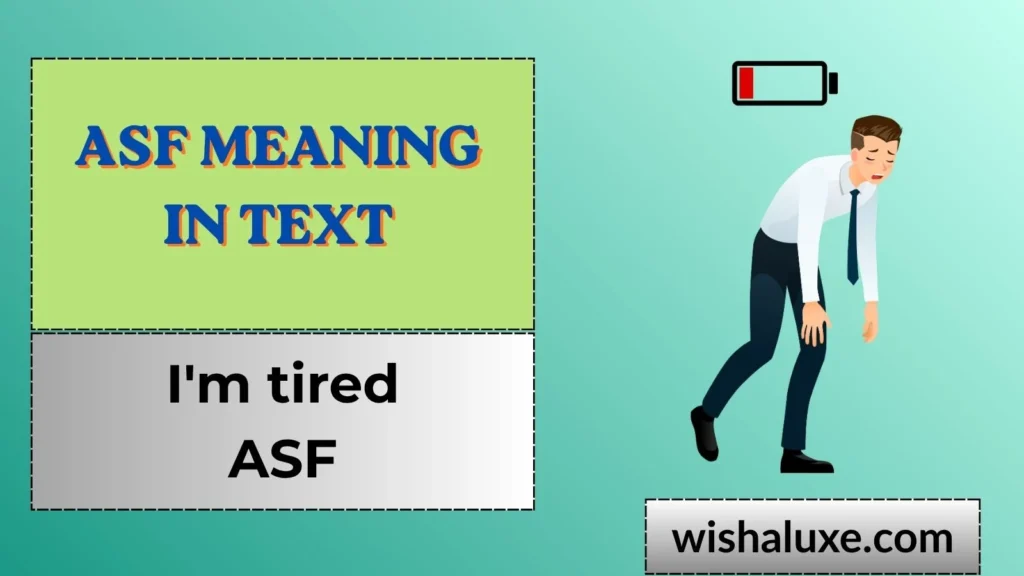
ASF is a popular internet abbreviation that most commonly stands for “as f*.”** It is used to intensify or emphasize a statement, feeling, description, or opinion. The abbreviation allows users to express strong emotions without typing the full phrase.
For example:
- “I’m tired ASF.”
- “That movie was funny ASF.”
- “This weather is hot ASF.”
In each example, ASF acts as an amplifier. It strengthens the adjective or emotion being described. Instead of simply saying “tired” or “funny,” the speaker uses ASF to indicate a much stronger level of that feeling.
The abbreviation became popular because it is short, easy to type, and widely understood among younger internet users. It is often used in casual digital communication rather than formal writing.
Although the phrase originates from a stronger expression, many users treat ASF as a standalone slang term rather than thinking about its original wording. As a result, it has become part of everyday online language across various social platforms.
Understanding context is important because ASF is intended to add emphasis and should generally be interpreted as an informal expression rather than a literal phrase.
Background & History
The rise of ASF is closely connected to the growth of internet culture and mobile messaging. As texting became more common, users began shortening phrases to communicate faster and save space.
During the early days of online chat rooms, internet forums, and SMS messaging, abbreviations such as LOL, BRB, and OMG became widely recognized. Over time, users created additional shorthand expressions to convey emotions and opinions more efficiently.
ASF emerged as part of this trend. It gained popularity through social media platforms where concise communication is valued. Character limits, rapid conversations, and meme culture encouraged users to develop shorter versions of common phrases.
The abbreviation spread quickly among younger audiences through platforms such as social networking sites, messaging apps, and video-sharing communities. Memes and viral content further accelerated its adoption.
Today, ASF is considered mainstream internet slang. Even users who do not regularly use the term often recognize its meaning because of its widespread presence online.
Its continued popularity demonstrates how digital communication shapes language. Expressions that once existed only in spoken conversation can become standardized abbreviations understood by millions of internet users worldwide.
Usage in Various Contexts
ASF appears in many different types of online conversations. While the meaning remains largely the same, the tone may vary depending on the situation.
Social Media Posts
Users frequently include ASF in captions and comments to emphasize opinions.
Example:
- “This food is good ASF.”
Text Messages
Friends often use it in private conversations.
Example:
- “I’m bored ASF right now.”
Gaming Communities
Players may use the term while discussing challenges, achievements, or experiences.
Example:
- “That level was hard ASF.”
Entertainment Discussions
People often describe movies, music, or celebrities using the abbreviation.
Example:
- “That show is addictive ASF.”
Casual Online Conversations
ASF appears naturally in everyday digital interactions because it adds emotional intensity without requiring a long explanation.
Despite its widespread use, the abbreviation remains highly informal. Users generally reserve it for relaxed environments where slang is acceptable and easily understood by the audience.
Common Misconceptions & Clarifications
Many people misunderstand ASF when they first encounter it online. One common misconception is that it always has a negative meaning. In reality, ASF can describe both positive and negative experiences.
For example:
- “Happy ASF” expresses excitement.
- “Sad ASF” expresses disappointment.
Another misunderstanding is that ASF represents a specific organization or technical term in every context. While some industries may use the same letters for different meanings, internet slang conversations typically use ASF as an expression of emphasis.
Some users also assume the abbreviation is universally appropriate. However, because it originates from a strong phrase, certain audiences may consider it inappropriate in professional or formal settings.
The key clarification is that ASF is primarily a casual slang expression intended to strengthen emotions, descriptions, or opinions.
Similar Terms & Alternatives
Internet users often substitute ASF with other expressions that serve a similar purpose.
Popular alternatives include:
- Very
- Extremely
- Super
- Really
- So
- Hella
- Mad
- mistaken
Examples:
- “Very tired”
- “Extremely funny”
- “Hella cool”
- “mistaken good”
These alternatives may be more suitable when communicating with people who are unfamiliar with internet slang or when maintaining a professional tone.
Choosing the right alternative depends on the audience, platform, and level of formality required.
How to Respond to This Term
When someone uses ASF in a text message, your response depends on the conversation.
Examples include:
- Agreeing: “I know, right?”
- Asking for details: “What happened?”
- Sharing a similar feeling: “Same here.”
- Continuing the discussion: “I felt that too.”
If you understand the context, responding naturally is usually enough. There is no special etiquette required when someone uses the abbreviation.
People generally treat ASF as a casual conversational enhancer rather than a term that requires a unique response.
Regional or Cultural Differences
ASF is most common in English-speaking online communities, particularly among younger users. However, internet culture allows slang terms to spread across countries and languages rapidly.
In some regions, users may prefer local slang expressions that serve the same purpose. Others adopt ASF directly because social media creates a shared digital vocabulary.
Age can also influence familiarity. Younger internet users often recognize the abbreviation instantly, while older users may need clarification.
Cultural acceptance varies as well. Some audiences view it as harmless slang, while others consider it too informal for everyday communication.
Comparison with Similar Terms
ASF is often compared to other internet abbreviations and emphasis words.
| Term | Meaning | Usage Style |
|---|---|---|
| ASF | Strong emphasis | Informal |
| LOL | Expresses laughter | Casual |
| OMG | Expresses surprise | Casual |
| FR | Means “for real” | Informal |
| NGL | Means “not gonna lie” | Informal |
Unlike abbreviations that convey specific reactions, ASF mainly strengthens a statement that already exists.
For example:
- “Funny” describes something amusing.
- “Funny ASF” greatly increases the intensity of that description.
Usage in Online Communities & Dating Apps
ASF frequently appears on social media platforms, discussion boards, gaming communities, and dating apps.
On dating platforms, users may include it when describing interests, appearances, or experiences.
Examples:
- “This date was awkward ASF.”
- “You’re funny ASF.”
The term helps users communicate emotions quickly and naturally. Because online conversations tend to be informal, slang expressions like ASF fit comfortably into the communication style of many digital communities.
However, users should consider their audience because not everyone interprets internet slang the same way.
Hidden or Offensive Meanings
In most situations, ASF simply acts as an intensifier. However, because it originates from a stronger phrase, some people may consider it mildly offensive.
The abbreviation itself is often viewed as less explicit than spelling out the full expression, but opinions differ among individuals and cultures.
There are generally no hidden meanings associated with ASF in standard internet slang. Context remains the most important factor when interpreting the abbreviation.
Users should avoid assuming malicious intent when encountering the term because it is usually used for emphasis rather than insult.
Suitability for Professional Communication
ASF is not recommended for professional communication.
Avoid using it in:
- Business emails
- Academic writing
- Job applications
- Professional presentations
- Formal reports
Instead, use alternatives such as:
- Very
- Extremely
- Highly
- Significantly
Professional environments typically favor clear and respectful language over internet slang. While ASF may be acceptable among friends, it can appear unprofessional in workplace settings.
FAQs:
What does ASF mean in texting?
ASF usually means “as f***” and is used to emphasize a statement or feeling.
Is ASF considered rude?
Not always, but some people may find it inappropriate because of its origin.
Can ASF have different meanings?
Yes, in specialized fields the letters may represent other terms, but online slang usually refers to emphasis.
Is ASF popular on social media?
Yes, it is widely used on social platforms, messaging apps, and online communities.
Should I use ASF in work emails?
No. Professional communication should avoid slang abbreviations like ASF.
What is a polite alternative to ASF?
Words such as “very,” “extremely,” or “highly” are more appropriate alternatives.
Conclusion:
ASF is a widely recognized internet abbreviation used to add strong emphasis to emotions, descriptions, and opinions. Although it originated from informal slang, it has become a common part of online communication across social media, messaging apps, gaming communities, and dating platforms.
Understanding its meaning helps users interpret conversations more accurately and communicate more effectively in digital spaces. While ASF works well in casual settings, it is generally unsuitable for professional or formal communication.
Knowing when and where to use the term ensures that your messages remain appropriate for your audience while keeping up with modern internet language.

Hi, I’m Alex Carry, the creator of Wishaluxe. I’m passionate about helping people find the perfect words for every special occasion, from birthdays and anniversaries to celebrations and heartfelt moments. Through Wishaluxe, I share creative ideas, meaningful messages, and inspiring content designed to make every occasion more memorable. My goal is simple: to help readers express their feelings with confidence and create lasting connections through thoughtful words.