If you’ve spent time on social media, messaging apps, online forums, or dating platforms, you’ve probably come across the term FOMO. Many people search for the meaning of this popular acronym because it appears frequently in text conversations, captions, comments, and everyday online communication.
Understanding internet slang helps people stay connected with modern digital culture and communicate more effectively.
FOMO is widely used to describe a feeling that many people experience in today’s connected world. Whether someone is talking about missing a party, not joining a trend, or feeling left out of an important event, this expression often appears in casual conversations.
As social media continues to showcase people’s experiences in real time, the term has become increasingly relevant.
This guide explains what FOMO means in text, where it came from, how it is used across different platforms, common misunderstandings, and whether it is appropriate in professional settings. By the end, you’ll have a clear understanding of this widely recognized internet expression.
Definition & Meaning
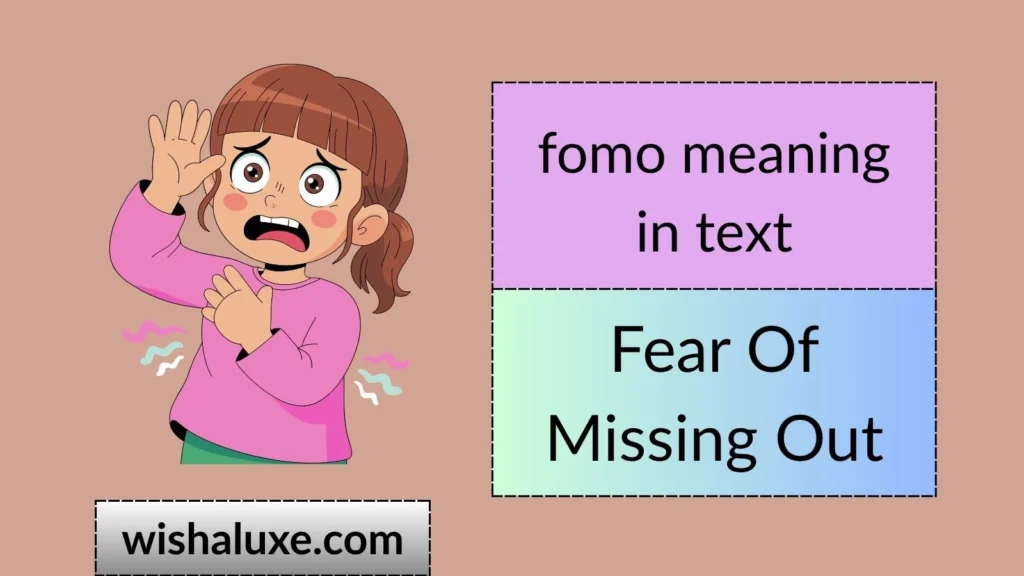
FOMO stands for “Fear Of Missing Out.”
In text messages and online conversations, it describes the feeling that other people may be experiencing something exciting, valuable, or enjoyable while you are not participating. It often involves anxiety, curiosity, or concern about being left out.
For example:
- “Everyone is going to the concert tonight and I’m getting serious FOMO.”
- “I saw all the vacation photos online and felt a little FOMO.”
- “Don’t post more pictures—I already have FOMO!”
The expression can be used seriously when someone genuinely feels excluded, or humorously when talking about everyday situations.
At its core, FOMO reflects a desire to stay connected to experiences, opportunities, and social activities. While it originally referred to social events, people now use it for many different situations, including travel, shopping, entertainment, investing, and career opportunities.
The term has become so common that many people use it as a regular word rather than thinking of it as an acronym.
Background & History
Although the feeling itself has existed throughout human history, the acronym FOMO became popular during the rise of social networking platforms.
Before social media, people typically learned about events after they happened. Today, platforms allow users to see activities, celebrations, achievements, and trends in real time. This constant exposure increased awareness of what others were doing, making the concept more visible and easier to describe.
The term gained significant popularity during the 2000s and 2010s as platforms such as Facebook, Instagram, Snapchat, and Twitter became part of everyday life. People frequently used the acronym to describe the emotional impact of seeing friends attend events or participate in activities without them.
Over time, the expression expanded beyond social gatherings. It became associated with:
- Limited-time sales
- Travel opportunities
- Investment trends
- Entertainment releases
- Professional opportunities
- Lifestyle experiences
Today, FOMO is recognized globally and is commonly used in both online and offline conversations.
Usage in Various Contexts
FOMO appears in many different situations and is not limited to social media.
Social Events
People often use it when they cannot attend parties, concerts, weddings, or gatherings.
Example:
“I wish I could come tonight. The photos are giving me FOMO.”
Travel
Travel-related posts frequently trigger this expression.
Example:
“Your beach pictures are causing major FOMO.”
Shopping
Businesses sometimes use the concept to encourage customers to act quickly.
Example:
“Limited stock available—don’t miss out.”
Entertainment
New movies, games, shows, or events often create excitement.
Example:
“Everyone is talking about the new series and now I have FOMO.”
Career and Education
People may feel they are missing valuable opportunities.
Example:
“Seeing everyone attend that conference gave me professional FOMO.”
The versatility of the term is one reason it remains so popular across digital platforms.
Common Misconceptions & Clarifications
Several misconceptions surround this expression.
It Does Not Always Mean Jealousy
Some people assume FOMO is the same as envy. While they can overlap, they are not identical. A person may simply wish they were participating without feeling jealous.
It Is Often Used Humorously
Not every use indicates genuine anxiety. Many people use it jokingly to express mild disappointment.
It Is Not Limited to Young People
Although popular among younger generations, people of all ages use the term.
It Does Not Always Involve Social Media
While social platforms contribute to it, the feeling can occur in everyday life without any online influence.
Understanding these distinctions helps prevent misinterpretation during conversations.
Similar Terms & Alternatives
Several expressions communicate ideas similar to FOMO.
- Missing out
- Feeling left out
- Social anxiety
- Event envy
- Exclusion anxiety
- Regret
- Curiosity
- Opportunity anxiety
People may also use phrases such as:
- “I wish I was there.”
- “Looks like I’m missing all the fun.”
- “I don’t want to be left out.”
These alternatives can often replace the acronym depending on the context and audience.
How to Respond to This Term
When someone mentions FOMO in a text conversation, your response can depend on the situation.
Friendly Response
“Don’t worry, we’ll invite you next time.”
Reassuring Response
“It was fun, but you’ll have plenty of chances to join us.”
Humorous Response
“Too late, the FOMO is already spreading!”
Encouraging Response
“You should definitely come to the next event.”
The best responses acknowledge the person’s feelings while keeping the conversation positive and inclusive.
Regional or Cultural Differences
The understanding of FOMO is generally consistent across English-speaking countries, but usage may vary.
In countries with strong social media adoption, the term is widely recognized and frequently used. Younger internet users often understand it immediately, while older audiences may be less familiar with the acronym.
Some cultures place a stronger emphasis on community participation and social belonging, which can make the concept especially relatable.
In non-English-speaking regions, people may either use the English acronym directly or translate the idea into local expressions that convey similar feelings.
As internet culture becomes increasingly global, the term continues to spread across languages and regions.
Comparison with Similar Terms
Understanding related expressions helps clarify when FOMO should be used.
| Term | Meaning | Difference |
|---|---|---|
| FOMO | Fear of missing out | Focuses on being excluded from experiences |
| Jealousy | Wanting what someone else has | Centers on comparison |
| Regret | Wishing a different choice was made | Looks back at past decisions |
| Curiosity | Desire to know more | Does not necessarily involve exclusion |
| Anxiety | General worry or stress | Broader emotional state |
While these concepts can overlap, FOMO specifically relates to concerns about missing opportunities, events, or experiences.
Usage in Online Communities & Dating Apps
Online communities frequently use this acronym in casual discussions.
Examples include:
- Gaming groups
- Social media comments
- Reddit discussions
- Fan communities
- Streaming platforms
On dating apps, people may use it differently.
Examples:
- “I almost didn’t swipe right, but FOMO convinced me.”
- “I don’t want dating-app FOMO.”
- “Everyone is meeting new people and I’m getting FOMO.”
In these settings, the term often reflects concern about missing potential relationships or social opportunities.
Hidden or Offensive Meanings
Generally, FOMO is not considered offensive.
In most contexts, it simply describes a common emotional experience. There are no widely recognized hidden, inappropriate, or explicit meanings attached to the acronym.
However, context always matters. Excessive use in marketing campaigns can sometimes feel manipulative because it intentionally encourages urgency and fear of missing opportunities.
Even so, the term itself remains neutral and socially acceptable.
Suitability for Professional Communication
FOMO is typically considered informal.
Appropriate Situations
- Team chats
- Internal discussions
- Casual workplace conversations
- Social media posts
Less Appropriate Situations
- Formal reports
- Legal documents
- Academic papers
- Professional business correspondence
In formal communication, it is usually better to use phrases such as:
- Concern about missing opportunities
- Exclusion from activities
- Desire to participate
- Missed opportunities
Using standard language ensures clarity and professionalism.
Why FOMO Has Become More Common in the Digital Age
Modern technology has made it easier than ever to see what other people are doing. Social media platforms provide constant updates about vacations, achievements, parties, and daily activities.
As a result, people are exposed to countless experiences they are not part of, increasing awareness of missed opportunities. This constant stream of information can make the feeling of being left out more noticeable than in previous generations.
Psychological Reasons Behind FOMO
The desire to belong is a natural human trait. People often compare their lives to those around them and seek social acceptance. When individuals see others enjoying experiences they cannot access, they may feel disconnected or excluded.
FOMO often stems from a combination of curiosity, social comparison, and the fear of making the wrong choice by missing a potentially rewarding experience.
Examples of FOMO in Everyday Text Conversations
People frequently use this acronym in casual messaging. For instance, a friend may text, “You all look like you’re having so much fun, now I have FOMO!” Someone else might use it after seeing photos from a concert or a family gathering.
In most cases, the phrase communicates a desire to participate rather than serious emotional distress.
How Brands and Marketers Use FOMO
Businesses often rely on the concept to encourage customer action. Limited-time discounts, countdown timers, exclusive memberships, and low-stock notifications are all examples of marketing techniques that create urgency.
By suggesting that an opportunity may disappear soon, companies motivate consumers to make faster decisions.
The Relationship Between FOMO and Social Media
Social media platforms play a significant role in amplifying this feeling. Users typically share highlights of their lives rather than everyday struggles.
Seeing a continuous stream of positive experiences can create the impression that others are constantly having more exciting lives. This selective sharing contributes to the popularity of the term in online discussions.
Can FOMO Affect Mental Well-Being?
Occasional feelings of missing out are normal, but excessive concern about others’ activities can create unnecessary stress. Constant comparison may lead to dissatisfaction with personal experiences.
Maintaining a healthy perspective and remembering that online content often represents only a small portion of reality can help reduce these effects.
Signs That Someone Is Experiencing FOMO
Certain behaviors may indicate that a person is experiencing this feeling. These can include frequently checking social media, feeling disappointed after seeing others’ activities, constantly seeking invitations, or struggling to enjoy present experiences because of concerns about what they might be missing elsewhere.
How Younger Generations Use the Term
Teenagers and young adults often use the expression casually in texts, memes, and social media comments. In many cases, it serves as a humorous way to react to exciting events rather than a serious emotional statement.
Its widespread use among younger audiences has helped make it a mainstream internet term.
Positive Effects of FOMO
Although often viewed negatively, this feeling can sometimes inspire beneficial action. It may encourage people to try new experiences, attend social events, learn new skills, or stay informed about important opportunities.
When managed appropriately, it can act as a source of motivation rather than anxiety.
When FOMO Is Used as a Joke
Many online users exaggerate the term for comedic effect. Someone might claim they have FOMO after seeing a friend’s meal, pet photo, or television recommendation.
In these situations, the expression is intended to be playful and entertaining rather than a serious reflection of emotional discomfort.
How to Avoid Misunderstanding FOMO in Messages
Context is important when interpreting the acronym. Some people use it sincerely, while others use it sarcastically or humorously.
Looking at the overall tone of the conversation can help determine whether the person is expressing genuine disappointment or simply making a lighthearted comment.
Future of FOMO in Online Communication
As digital communication continues to evolve, the term is likely to remain relevant. New platforms and technologies may change how people interact, but the underlying desire to stay connected with experiences and opportunities is unlikely to disappear.
For this reason, FOMO will probably continue to be a common part of internet vocabulary for years to come.
FAQs:
What does FOMO stand for?
FOMO stands for Fear Of Missing Out, which describes concern about missing experiences or opportunities.
Is FOMO a positive or negative term?
It is generally neutral but often refers to mild anxiety or concern about being left out.
Is FOMO commonly used in texting?
Yes, it is frequently used in text messages, social media posts, and online conversations.
Can FOMO be used jokingly?
Yes. Many people use it humorously when talking about events, food, travel, or entertainment.
Is FOMO appropriate at work?
It can be acceptable in casual workplace conversations but is usually avoided in formal communication.
Does FOMO have any offensive meaning?
No. It is widely considered a harmless and non-offensive expression.
Conclusion:
FOMO is one of the most recognizable internet acronyms in modern communication. Short for “Fear Of Missing Out,” it describes the feeling that others may be enjoying experiences, opportunities, or events that you are not part of.
The term has grown from a social media buzzword into a common expression used across texting, online communities, dating apps, workplaces, and everyday conversations. While it often refers to mild anxiety about being left out, it is also frequently used in a playful and humorous way.
Understanding its meaning and usage can help you communicate more effectively and better understand contemporary digital culture

Hi, I’m Alex Carry, the creator of Wishaluxe. I’m passionate about helping people find the perfect words for every special occasion, from birthdays and anniversaries to celebrations and heartfelt moments. Through Wishaluxe, I share creative ideas, meaningful messages, and inspiring content designed to make every occasion more memorable. My goal is simple: to help readers express their feelings with confidence and create lasting connections through thoughtful words.