If you spend time texting, chatting on social media, or using messaging apps, you have probably come across the abbreviation LMK. Many people search for the meaning of this term because internet slang evolves quickly, and not everyone is familiar with every shortcut used in online conversations.
Understanding common abbreviations helps people communicate more efficiently and avoid misunderstandings.
LMK is one of the most frequently used texting acronyms in digital communication. It appears in personal messages, social media comments, group chats, online communities, and even workplace conversations.
While its meaning is generally straightforward, the way it is used can vary depending on the context and the relationship between the people communicating.
This guide explains what LMK means, where it came from, how people use it in different situations, common misunderstandings, alternative expressions, and the best ways to respond when someone sends it to you.
Definition & Meaning
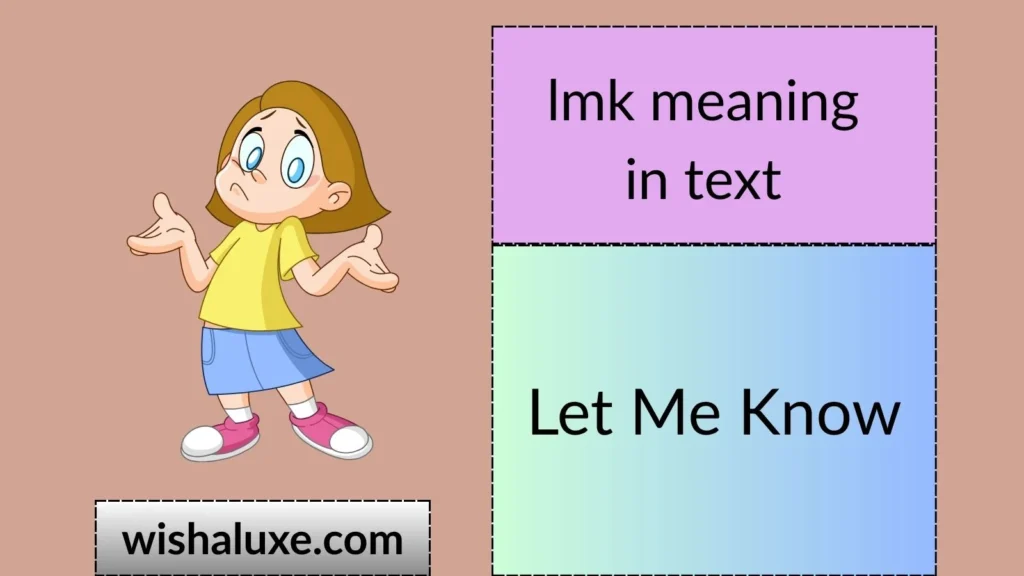
LMK stands for “Let Me Know.”
It is a shorthand expression used to request information, confirmation, feedback, or a response from another person. Instead of typing the full phrase, people use LMK to save time and make conversations faster.
Examples
- “LMK if you’re free tonight.”
- “LMK what you think about this idea.”
- “LMK when you arrive.”
- “LMK if you need any help.”
In each example, the sender is asking the recipient to provide information or update them later.
The abbreviation is popular because it is simple, direct, and easy to understand. Most people interpret it as a polite request for communication rather than a command.
Background & History
The rise of abbreviations like LMK is closely connected to the growth of digital communication. During the early days of text messaging, character limits encouraged users to shorten words and phrases whenever possible.
As mobile phones became more common in the late 1990s and early 2000s, abbreviations such as:
- LOL (Laugh Out Loud)
- BRB (Be Right Back)
- IDK (I Don’t Know)
- IMO (In My Opinion)
became part of everyday communication.
LMK emerged during this period as a convenient replacement for “let me know.” Since the phrase is frequently used in conversations, shortening it made texting quicker and more efficient.
Over time, LMK spread beyond SMS messages and became common on social media platforms, messaging apps, gaming communities, online forums, and professional communication channels.
Today, it is recognized by millions of internet users worldwide.
Usage in Various Contexts
LMK can be used in many different situations. The meaning remains the same, but the purpose may vary.
Personal Conversations
Friends often use LMK when making plans.
Example:
- “LMK if you want to go to the movie later.”
Family Communication
Family members use it to stay informed.
Example:
- LMK when you get home safely.
Workplace Messages
Coworkers may use LMK in informal workplace chats.
Example:
- “LMK if you have questions about the project.”
Customer Service
Support teams sometimes use it when offering assistance.
Example:
- “LMK if the issue continues.”
Social Media
Users frequently post:
- “LMK your favorite song.”
- “LMK what you think.”
In these situations, LMK encourages engagement and responses from followers.
Common Misconceptions & Clarifications
Although LMK is widely understood, some misconceptions still exist.
It Is Not a Secret Code
Some people assume LMK has a hidden meaning. In most cases, it simply means “let me know.”
It Is Not Always Informal
While commonly used in casual conversations, LMK can appear in semi-professional communication when the environment is relaxed.
It Does Not Express Emotion
Unlike abbreviations such as LOL or ROFL, LMK does not indicate feelings or reactions. It simply requests information.
Context Still Matters
The exact tone depends on the sentence.
For example:
- “LMK when you’re available” sounds polite.
- “LMK ASAP” may sound more urgent.
Similar Terms & Alternatives
Several expressions serve a similar purpose.
Common Alternatives
- Let me know
- Tell me
- Keep me posted
- Update me
- Inform me
- Get back to me
- Give me an update
- Notify me
Informal Alternatives
- Hit me up
- Message me
- Shoot me a text
- Drop me a message
Professional Alternatives
- Please advise
- Kindly inform me
- Please update me
- Please confirm
Choosing the right alternative depends on the situation and audience.
How to Respond to This Term
Responding to LMK is usually simple because it requests information.
When You Have an Answer
Example:
Person: “LMK if you’re coming.”
Response:
- “Yes, I’ll be there.”
- “Sorry, I can’t make it.”
When You Need Time
Example:
- “I’ll check my schedule and let you know.”
- “I’ll get back to you later.”
When More Information Is Needed
Example:
- “Can you tell me more details first?”
The best response is usually clear, direct, and relevant to the request.
Regional or Cultural Differences
LMK is widely understood in English-speaking countries, including:
- United States
- Canada
- United Kingdom
- Australia
- New Zealand
In countries where English is commonly used online as a second language, LMK is also becoming increasingly familiar.
However, some people who are new to internet slang may not immediately recognize the abbreviation. Younger users tend to understand it more quickly than older generations.
Cultural communication styles can also affect how often LMK is used. Some cultures prefer direct requests, while others favor more formal language.
Comparison with Similar Terms
Understanding how LMK differs from other abbreviations can prevent confusion.
| Term | Meaning | Main Purpose |
|---|---|---|
| LMK | Let Me Know | Request information |
| IDK | I Don’t Know | Express uncertainty |
| IMO | In My Opinion | Share an opinion |
| FYI | For Your Information | Provide information |
| BRB | Be Right Back | Indicate temporary absence |
| BTW | By The Way | Introduce additional information |
Unlike these abbreviations, LMK specifically asks for a future response or update.
Usage in Online Communities & Dating Apps
LMK appears frequently in online communities and dating platforms.
Online Forums
Users may write:
- “LMK if you’ve tried this method.”
- “LMK your thoughts.”
Gaming Communities
Players often say:
- “LMK when you’re online.”
- “LMK if you want to join.”
Dating Apps
LMK is commonly used to keep conversations moving.
Examples:
- “LMK if you’d like to meet sometime.”
- “LMK what you’re looking for.”
- “LMK when you’re free.”
In dating conversations, the abbreviation generally carries no romantic meaning by itself. It simply requests a response.
Hidden or Offensive Meanings
In most situations, LMK has no hidden, offensive, or inappropriate meaning.
The abbreviation almost always means “Let Me Know.”
However, internet slang occasionally develops niche meanings within small online groups. These alternative interpretations are uncommon and rarely understood outside those communities.
For everyday texting, social media, workplace chats, and messaging apps, you can safely assume LMK means “Let Me Know.”
Suitability for Professional Communication
Whether LMK is appropriate in professional communication depends on the setting.
Appropriate Situations
- Internal team chats
- Informal workplace messaging
- Communication with familiar coworkers
- Quick project discussions
Less Appropriate Situations
- Formal business emails
- Legal correspondence
- Academic writing
- Official reports
Instead of LMK, professional alternatives include:
- Please let me know.
- Kindly advise.
- Please provide an update.
- Please confirm.
When in doubt, use the full phrase rather than the abbreviation.
Why LMK Became Popular in Digital Communication
The popularity of LMK comes from the need for quick and efficient communication. As texting and instant messaging became part of everyday life, users started shortening common phrases to save time.
LMK quickly gained acceptance because it replaces a frequently used expression with just three letters. Its simplicity makes conversations faster while still keeping the message clear.
Examples of LMK in Everyday Conversations
Seeing LMK in real-world examples can help people understand how naturally it fits into conversations.
Examples include:
- “LMK if you’re available this weekend.”
- “I sent the document. LMK if anything needs changes.”
- “LMK what restaurant you prefer.”
- “LMK when you’re done with the meeting.”
These examples show how the abbreviation works in both casual and practical situations.
When You Should Avoid Using LMK
Although LMK is widely understood, it is not suitable for every situation. Formal business proposals, academic papers, legal documents, and official correspondence usually require complete phrases instead of abbreviations.
Using the full expression “let me know” demonstrates professionalism and reduces the chance of confusion.
The Tone Behind LMK
The tone of LMK can vary depending on the conversation. In friendly chats, it often sounds relaxed and conversational. In work related messages, it can sound professional yet efficient.
The surrounding words usually determine whether the message feels casual, urgent, polite, or neutral.
How Different Age Groups Use LMK
Younger generations who grew up with smartphones typically use LMK without thinking twice. Millennials, Gen Z, and many Gen Alpha users recognize it instantly.
Older users may understand it less frequently, especially if they are not active on social media or messaging apps. However, the abbreviation has become common enough that awareness continues to grow across all age groups.
LMK in Group Chats
Group conversations often involve planning, decision-making, and coordination. LMK helps simplify these discussions by encouraging updates from multiple participants.
Examples:
- “LMK who can attend.”
- “LMK your preferred time.”
- “LMK if everyone agrees.”
This usage helps keep conversations organized and productive.
The Psychology Behind Text Abbreviations
People naturally look for ways to communicate faster. Text abbreviations reduce typing effort while maintaining meaning.
LMK succeeds because it balances brevity with clarity. Unlike some internet slang that can be confusing, LMK remains easy to understand, making it useful for a broad audience.
How Social Media Influenced the Growth of LMK
Social media platforms accelerated the spread of internet abbreviations. Users adopted shorthand expressions to create shorter captions, comments, and direct messages.
As people encountered LMK repeatedly across different platforms, it became part of everyday online language and eventually moved into offline conversations as well.
Can LMK Be Used in Emails?
LMK can appear in emails, particularly when communicating with coworkers, clients you know well, or team members in a relaxed environment. For example:
- “LMK if you have any questions.”
However, in highly formal emails, writing the complete phrase may create a more polished impression.
Signs Someone Expects a Quick Reply When Using LMK
Not every LMK request requires an immediate answer. However, additional words can indicate urgency.
Examples include:
- “LMK ASAP.”
- “LMK before noon.”
- “LMK as soon as possible.”
- “LMK today.”
These phrases suggest the sender is waiting for information within a specific timeframe.
The Future of Internet Slang Like LMK
Digital language constantly evolves. While some abbreviations disappear over time, LMK has remained relevant because of its usefulness and simplicity.
As messaging continues to dominate communication, practical abbreviations like LMK are likely to remain part of online conversations for years to come.
Mistakes People Make When Interpreting LMK
New internet users sometimes confuse LMK with other abbreviations or assume it has a hidden meaning. In reality, the phrase is usually straightforward.
Most misunderstandings occur when people are unfamiliar with texting slang or encounter the abbreviation for the first time.
Why Understanding Texting Abbreviations Matters
Knowing common abbreviations helps people communicate more confidently online. It reduces confusion, improves response times, and makes conversations easier to follow.
Understanding terms like LMK also helps users navigate social media, messaging apps, forums, and professional communication platforms more effectively.
LMK and Modern Communication Trends
The rise of short-form communication reflects broader changes in how people interact online. Quick replies, instant messaging, and mobile-first communication have increased the demand for concise language.
LMK represents a small but important example of how communication continues to adapt to digital lifestyles.
FAQs:
What does LMK stand for?
LMK stands for “Let Me Know.”
Is LMK rude?
No. It is generally considered a polite and casual request for information.
Can LMK be used in professional messages?
Yes, in informal workplace communication, but the full phrase is often better in formal settings.
Is LMK commonly used on social media?
Yes. It frequently appears in comments, captions, posts, and direct messages.
Does LMK have a romantic meaning?
No. It usually has no romantic meaning unless the surrounding conversation suggests one.
How should I reply to LMK?
Simply provide the information, confirmation, or update being requested.
Conclusion:
LMK is one of the most common abbreviations used in digital communication today. Standing for “Let Me Know,” it serves as a quick and convenient way to request information, updates, opinions, or confirmation from another person.
Its popularity comes from its simplicity and versatility across text messages, social media, online communities, dating apps, and even some workplace conversations. Although it is generally informal, most internet users recognize and understand it immediately.
By learning how LMK is used, when it is appropriate, and how to respond to it, you can communicate more confidently and avoid misunderstandings in both personal and professional conversations.

Hi, I’m Alex Carry, the creator of Wishaluxe. I’m passionate about helping people find the perfect words for every special occasion, from birthdays and anniversaries to celebrations and heartfelt moments. Through Wishaluxe, I share creative ideas, meaningful messages, and inspiring content designed to make every occasion more memorable. My goal is simple: to help readers express their feelings with confidence and create lasting connections through thoughtful words.