If you spend time texting, chatting on social media, or participating in online communities, you have probably come across the abbreviation OFC.
Many people search for its meaning because internet slang evolves quickly, and understanding these short forms helps conversations flow more naturally.
OFC is one of the most common abbreviations used in digital communication, appearing in text messages, comments, gaming chats, dating apps, and social media platforms.
The term is generally friendly and informal, making it popular among people who want to reply quickly without typing complete phrases. However, its meaning and tone can vary slightly depending on the conversation and the relationship between the people communicating.
Understanding when and how to use OFC can help avoid confusion and make online interactions smoother.
This guide explains what OFC means, where it came from, how people use it today, potential misunderstandings, and whether it is appropriate in professional communication.
Definition & Meaning
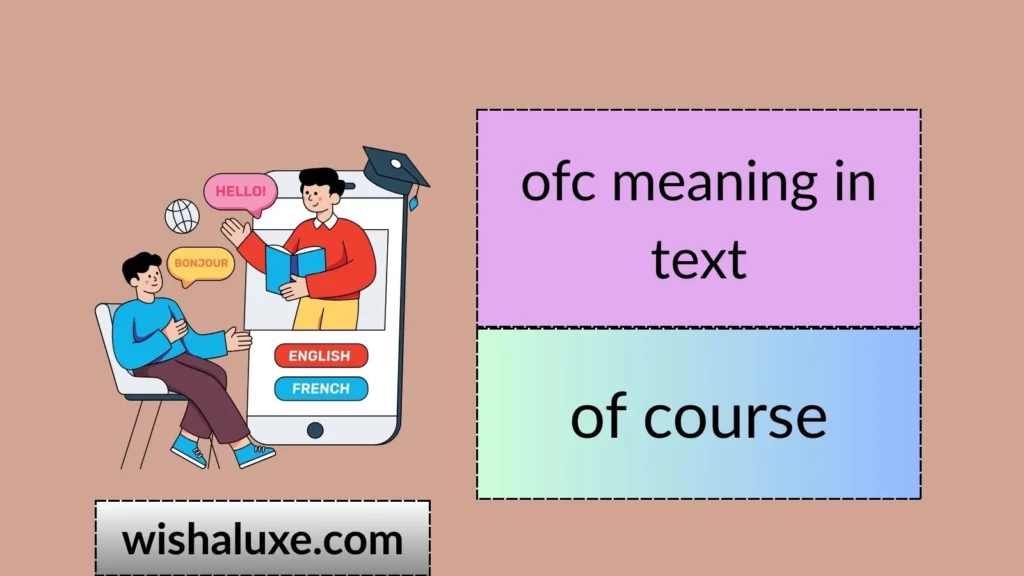
OFC is a widely used abbreviation for the phrase “of course.” It serves as a quick and convenient way to express agreement, confirmation, certainty, or willingness to help.
When someone uses OFC, they are usually communicating that the answer is obvious, expected, or given without hesitation. The abbreviation helps save time while maintaining a friendly tone.
Examples include:
- “Can you send me the file?” — “OFC!”
- “Are you coming tonight?” — “OFC, I wouldn’t miss it.”
- “Can I ask you a question?” — “OFC.”
Depending on context, OFC can sound enthusiastic, supportive, reassuring, or casual. The tone often depends on punctuation, emojis, and the overall conversation.
For example:
- “OFC 😊” sounds warm and friendly.
- “OFC!” sounds confident and enthusiastic.
- “ofc” in lowercase usually appears casual and relaxed.
Because texting favors speed and convenience, OFC has become a standard part of internet communication across many platforms.
Background & History
Like many internet abbreviations, OFC emerged as digital communication became faster and more informal. Early online chat rooms, messaging services, and text messaging encouraged users to shorten common phrases to save time and characters.
The phrase “of course” has existed in English for centuries, but the abbreviated form gained popularity during the rise of:
- SMS texting
- Instant messaging platforms
- Online forums
- Social networking websites
- Mobile messaging apps
As internet culture expanded, users increasingly relied on abbreviations such as:
- LOL (Laugh Out Loud)
- BRB (Be Right Back)
- IMO (In My Opinion)
- IDK (I Don’t Know)
- OFC (Of Course)
The widespread use of smartphones further accelerated the adoption of shorthand expressions. Today, OFC is recognized by millions of internet users worldwide and appears regularly in personal conversations, online communities, and social media interactions.
Usage in Various Contexts
OFC can appear in many different types of conversations. While its core meaning remains the same, its purpose may vary depending on the situation.
Friendly Conversations
Friends commonly use OFC to show agreement or enthusiasm.
Example:
- “Want to grab coffee later?”
- “OFC!”
Family Chats
Family members may use it to reassure or support each other.
Example:
- “Can you help me with this?”
- “OFC.”
Social Media
People often use OFC in comments and replies to express agreement.
Example:
- “This movie deserved an award.”
- “OFC it did.”
Gaming Communities
Gamers frequently use OFC to confirm participation or understanding.
Example:
- “Ready for the next match?”
- “OFC.”
Dating Apps
In dating conversations, OFC can make responses feel friendly and approachable.
Example:
- “Would you like to meet this weekend?”
- “OFC, that sounds fun.”
Because it is versatile and simple, OFC fits naturally into many forms of online communication.
Common Misconceptions & Clarifications
Although OFC usually means “of course,” some people misunderstand its tone or intention.
It Is Not Always Rude
Some readers interpret “of course” as sarcastic. However, OFC is usually meant positively unless the surrounding conversation suggests otherwise.
It Does Not Always Mean Excitement
OFC can indicate agreement without expressing strong enthusiasm. Context determines the emotional tone.
It Is Not a Formal Expression
While common in casual messaging, OFC is generally considered informal and may not be suitable for professional settings.
Context Matters
The same abbreviation can sound supportive, neutral, or sarcastic depending on how it is used.
Understanding the conversation helps determine the intended meaning.
Similar Terms & Alternatives
Several abbreviations and expressions serve a similar purpose.
Sure
A straightforward way to express agreement.
Absolutely
Stronger than OFC and often more enthusiastic.
Definitely
Shows confidence and certainty.
Yep
A casual confirmation.
Certainly
More formal and professional.
No Problem
Frequently used when agreeing to help someone.
Each alternative has its own tone and level of formality, making it useful in different situations.
How to Respond to This Term
When someone sends OFC, your response depends on the conversation.
If they agree to help:
- “Thank you!”
- “I appreciate it.”
If they confirm plans:
- “Great, see you then.”
- “Sounds good.”
If they answer a question:
- “Thanks for clarifying.”
- “Good to know.”
In most cases, OFC signals positivity or agreement, so a friendly response works best.
Regional or Cultural Differences
OFC is widely recognized in English-speaking online communities, but its popularity can vary across regions.
In countries where English is commonly used online, OFC is generally understood without explanation. In multilingual communities, some users may not recognize the abbreviation immediately and may prefer the full phrase “of course.”
Younger internet users tend to understand OFC more easily than people who rarely use social media or texting abbreviations. Cultural communication styles can also affect how frequently abbreviations are used.
Despite these differences, OFC remains one of the more universally recognized internet shorthand expressions.
Comparison with Similar Terms
| Term | Meaning | Tone | Formality |
|---|---|---|---|
| OFC | Of Course | Friendly | Informal |
| Yep | Yes | Casual | Informal |
| Definitely | Certainly | Confident | Semi-formal |
| Absolutely | Completely Agree | Enthusiastic | Semi-formal |
| Certainly | Of Course | Professional | Formal |
| Sure | Yes | Neutral | Flexible |
This comparison shows that OFC is best suited for casual communication where speed and friendliness are important.
Usage in Online Communities & Dating Apps
Online communities frequently use OFC because quick responses help conversations move smoothly.
Social Platforms
Users often reply with OFC when agreeing with opinions or confirming information.
Forums
Members use OFC to answer questions or support discussions.
Gaming Servers
Players employ OFC to indicate readiness or agreement.
Dating Apps
On dating platforms, OFC can help create a relaxed and approachable atmosphere. It often signals interest, enthusiasm, or willingness to continue the conversation.
Because dating conversations rely heavily on tone, OFC is often paired with emojis or additional text to make intentions clearer.
Hidden or Offensive Meanings
In most situations, OFC simply means “of course” and carries no offensive meaning.
However, internet slang can occasionally develop alternative interpretations within specific groups or communities. These alternative meanings are generally uncommon and rarely encountered in everyday texting.
The intended meaning almost always depends on context. When used in standard messaging, social media conversations, or dating apps, OFC should typically be understood as “of course.”
If a conversation seems unclear, asking for clarification is the safest approach.
Suitability for Professional Communication
OFC is generally not recommended in formal business communication.
Professional emails, reports, and workplace messages usually benefit from complete phrases such as:
- “Of course.”
- “Certainly.”
- “Absolutely.”
- “I’d be happy to help.”
Using full words appears more polished and professional.
However, in informal workplace chats between colleagues, OFC may occasionally be acceptable if company culture encourages casual communication. Even then, users should consider the audience and context before relying on internet abbreviations.
Why OFC Became Popular in Digital Communication
The rise of instant messaging encouraged people to communicate faster and more efficiently. Short abbreviations like OFC became popular because they allow users to respond quickly without typing complete phrases.
As texting, social media, and messaging apps evolved, internet slang became part of everyday communication. OFC remains widely used because it is simple, easy to understand, and instantly conveys agreement or certainty.
Examples of OFC in Everyday Conversations
Seeing the abbreviation in real conversations helps people understand its practical use. For example, a friend might ask, “Can you help me with my homework?” and receive “OFC!” as a response.
In family chats, someone may say, “Will you be at dinner tonight?” and get “ofc” in return. These examples show how the abbreviation naturally replaces the phrase “of course” while maintaining the same meaning.
The Tone Behind OFC in Messages
The meaning of OFC can change slightly depending on tone and context. In a friendly conversation, it may sound warm and supportive. When paired with emojis, it often appears enthusiastic or caring.
In some situations, it can even sound playful. Understanding the surrounding conversation is important because digital messages lack facial expressions and voice cues that normally help communicate emotions.
When You Should Avoid Using OFC
Although common in casual communication, OFC is not appropriate everywhere. Formal business emails, academic papers, customer service messages, and professional correspondence typically require complete words and proper grammar.
Using internet abbreviations in these settings can appear overly casual and may not leave the best impression.
How Different Age Groups Use OFC
Younger internet users tend to use OFC more frequently because they are familiar with texting culture and online slang. Teenagers and young adults often include it in daily conversations without thinking twice.
Older generations may recognize the abbreviation but use it less often, preferring to write the full phrase instead. This difference reflects changing communication habits across age groups.
OFC and the Evolution of Internet Slang
Internet language constantly changes as new platforms and trends emerge. OFC is part of a larger group of abbreviations that have shaped online communication for decades.
While some slang terms disappear quickly, OFC has remained relevant because its meaning is straightforward and universally useful. Its continued popularity demonstrates how efficient communication influences modern language.
Does Capitalization Matter in OFC?
Users often wonder whether “OFC,” “Ofc,” and “ofc” have different meanings. In most cases, they mean exactly the same thing.
Capital letters may emphasize enthusiasm or certainty, while lowercase versions often appear more relaxed and conversational. The intended message usually stays the same regardless of capitalization.
Psychological Impact of Short Texting Abbreviations
Abbreviations like OFC make conversations feel faster and more informal. They help create a sense of familiarity between people and can make digital interactions feel less rigid.
Many users prefer shorthand expressions because they reduce effort while maintaining engagement in conversations.
How OFC Improves Conversation Flow
Quick responses help keep online discussions moving smoothly. OFC allows users to express agreement immediately without interrupting the pace of the conversation.
This is especially useful in group chats, gaming communities, and fast-moving social media discussions where speed matters.
Future of OFC in Online Communication
As language continues evolving online, OFC is likely to remain a commonly recognized abbreviation. While new slang terms appear regularly, expressions based on everyday phrases tend to survive longer.
Because “of course” is a timeless expression, its abbreviated form will probably continue being used across messaging platforms and social networks for years to come.
Signs Someone Is Using OFC Sarcastically
Although OFC is usually positive, sarcasm can sometimes change its meaning. Clues such as exaggerated punctuation, negative context, or previous disagreement may suggest sarcasm.
For example, “OFC that happened again…” may indicate frustration rather than genuine agreement. Understanding context helps prevent misinterpretation.
OFC in Group Chats and Community Discussions
Group conversations often move quickly, making short responses especially useful. OFC is commonly used to confirm plans, support ideas, or acknowledge messages without creating lengthy replies.
Its simplicity helps maintain active participation while keeping discussions concise and easy to follow.
FAQs:
What does OFC mean in texting?
OFC usually stands for “of course” and is used to express agreement, confirmation, or willingness.
Is OFC considered rude?
No. It is generally friendly and positive, though context can occasionally make it sound sarcastic.
Can OFC be used on dating apps?
Yes. Many people use OFC on dating apps to show interest, agreement, or enthusiasm.
Is OFC the same as saying yes?
Not exactly. It means “of course,” which often conveys stronger agreement than a simple yes.
Should I use OFC in work emails?
It is better to use the full phrase “of course” or another professional alternative in formal communication.
Do people still use OFC?
Yes. It remains a popular abbreviation across texting, social media, gaming communities, and messaging apps.
Conclusion:
OFC is a simple abbreviation for “of course” that has become a common part of modern digital communication. It helps people respond quickly while expressing agreement, certainty, support, or enthusiasm.
Although primarily used in casual conversations, social media interactions, gaming communities, and dating apps, its meaning remains largely consistent across platforms.
Understanding its tone, context, and alternatives can help users communicate more effectively and avoid misunderstandings.
Whether you encounter it in a text message or an online discussion, OFC is usually a friendly and positive expression that indicates a clear and confident response.

Hi, I’m Alex Carry, the creator of Wishaluxe. I’m passionate about helping people find the perfect words for every special occasion, from birthdays and anniversaries to celebrations and heartfelt moments. Through Wishaluxe, I share creative ideas, meaningful messages, and inspiring content designed to make every occasion more memorable. My goal is simple: to help readers express their feelings with confidence and create lasting connections through thoughtful words.