If you spend time texting, scrolling through social media, or chatting online, you have probably come across the abbreviation “HMU.” Many people search for HMU meaning in text because internet slang evolves quickly, and not everyone is familiar with every acronym used in digital conversations.
HMU is one of the most common shorthand expressions found in text messages, social media posts, gaming communities, and dating apps. While the phrase is simple, its meaning can vary slightly depending on the situation and the relationship between the people communicating.
Understanding how and when to use it can help you communicate more naturally online and avoid misunderstandings.
This guide explores the meaning of HMU, its origins, different ways people use it, common misconceptions, alternatives, cultural differences, and whether it is appropriate in professional communication. By the end, you will have a clear understanding of this popular internet abbreviation and how to respond when someone sends it to you.
Definition & Meaning
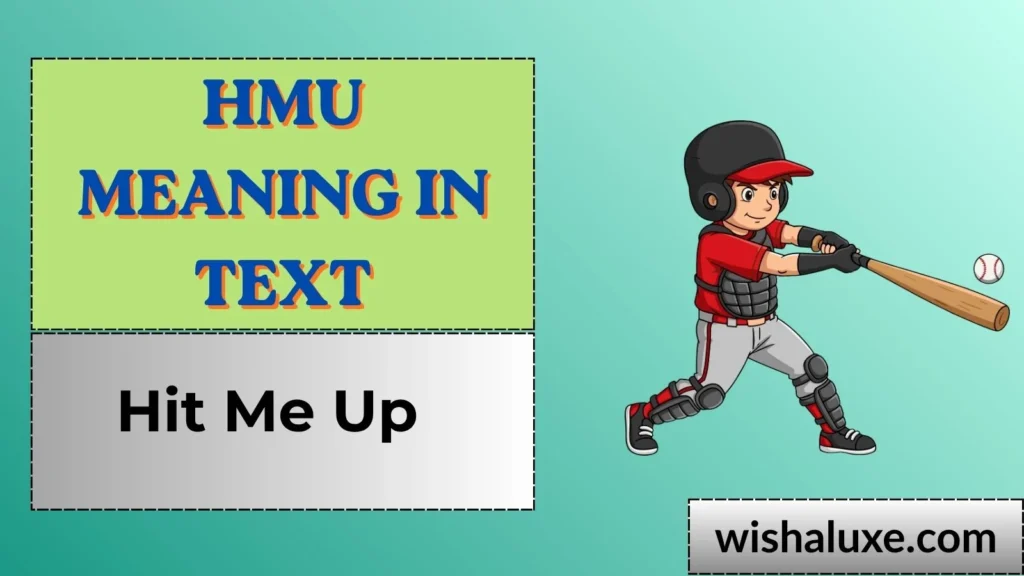
HMU stands for “Hit Me Up.”
In modern texting and online communication, this phrase is an informal way of saying:
- Contact me
- Message me
- Call me
- Reach out to me
- Let me know
The exact meaning depends on the context of the conversation.
Examples
Example 1:
- Person A: “I’m free this weekend.”
- Person B: “HMU if you want to hang out.”
Meaning: Contact me if you want to meet.
Example 2:
- “HMU when you get home.”
Meaning: Send me a message when you arrive home safely.
Example 3:
- “Anyone interested in gaming tonight? HMU.”
Meaning: Contact me if you want to play.
The phrase is generally friendly and casual. It often serves as an invitation for further communication rather than a direct request for an immediate response.
Many people use HMU because it saves time and space while typing. Since texting and social media encourage brief communication, abbreviations like HMU have become part of everyday digital language.
Although the abbreviation appears simple, the tone can change based on context. It may sound friendly, social, romantic, professional among close colleagues, or purely informational depending on how it is used.
Background & History
The phrase “hit me up” existed long before smartphones and social media became popular. Originally, it was part of informal spoken English and simply meant to contact or reach someone.
As text messaging gained popularity in the late 1990s and early 2000s, people began shortening commonly used phrases into acronyms. This trend created abbreviations such as:
- LOL (Laugh Out Loud)
- BRB (Be Right Back)
- IDK (I Don’t Know)
- HMU (Hit Me Up)
The growth of instant messaging platforms accelerated the use of HMU. Chat rooms, online forums, and messaging services encouraged users to communicate quickly, making abbreviations practical and convenient.
Social media platforms later helped spread the term worldwide. Users frequently posted messages like:
- “HMU for details.”
- “HMU if you’re interested.”
- “HMU anytime.”
Over time, HMU became a standard part of internet slang and is now recognized by millions of people across different age groups.
Interestingly, while younger users helped popularize the abbreviation, many adults also use it regularly. Today, HMU appears across texting apps, social media networks, gaming platforms, and online communities.
Its longevity demonstrates how certain internet abbreviations become deeply integrated into digital communication rather than disappearing as temporary trends.
Usage in Various Contexts
HMU can be used in several different situations.
Friendship
Friends often use HMU to stay connected.
Example:
- “HMU when you’re free.”
Meaning:
- Contact me when you have time.
Social Events
People use it when inviting others to activities.
Example:
- “HMU if you want tickets.”
Meaning:
- Reach out if you’re interested.
Gaming
Online gamers frequently use HMU.
Example:
- “Looking for teammates tonight. HMU.”
Meaning:
- Message me if you want to join.
Business Networking
In some informal professional settings:
Example:
- “HMU if you have questions.”
Meaning:
- Contact me if you need assistance.
Dating
On dating apps, HMU often indicates interest in continuing a conversation.
Example:
- “HMU if you’d like to chat.”
Meaning:
- Send me a message if interested.
Because HMU is flexible, understanding the surrounding conversation is important. The same abbreviation can convey different intentions depending on the relationship between the people involved.
Common Misconceptions & Clarifications
Many misunderstandings surround HMU.
It Always Means Romance
This is false.
Although HMU can be used in dating contexts, it is commonly used among friends, coworkers, classmates, and online communities.
It Is Always Flirtatious
Not necessarily.
Most uses are completely casual and friendly.
It Demands Immediate Contact
Wrong.
HMU usually suggests future communication rather than requiring an immediate response.
It Is Rude
Generally, no.
The phrase is considered informal but not offensive in normal conversation.
Everyone Understands It
Not always.
Older generations or people unfamiliar with internet slang may not recognize the abbreviation.
Understanding these clarifications helps avoid confusion when communicating online.
Similar Terms & Alternatives
Several phrases convey a similar meaning.
Text Me
A direct request to send a text message.
Message Me
Common on social media platforms.
Contact Me
Slightly more formal.
Reach Out
Professional yet friendly.
Let Me Know
Used when seeking updates or information.
Call Me
Specifically requests a phone conversation.
Ping Me
Popular in workplace communication and technology industries.
Choosing an alternative depends on your audience and the level of formality required.
How to Respond to This Term
Responding to HMU is usually straightforward.
If You’re Interested
- “Sure, I’ll message you later.”
- “Sounds good.”
- “I definitely will.”
If You Need More Information
- “About what exactly?”
- “What do you need help with?”
If You’re Not Interested
- “Thanks, but I’m busy.”
- “Maybe another time.”
If Someone Says “HMU When You Arrive”
You can simply reply:
- “Will do.”
- “Okay.”
- “Sure, I’ll text you.”
The best response depends on the relationship and situation.
Regional or Cultural Differences
HMU is widely understood in many English-speaking regions, including:
- United States
- Canada
- United Kingdom
- Australia
However, usage may vary.
In regions where English is a second language, people may recognize the abbreviation through social media rather than everyday conversation.
Younger internet users tend to understand HMU immediately, while older users may prefer the full phrase “contact me” or “message me.”
Global social media culture has made HMU more recognizable across different countries, even among non-native English speakers.
Comparison with Similar Terms
| Term | Meaning | Formality |
|---|---|---|
| HMU | Contact me | Informal |
| DM Me | Send a direct message | Informal |
| Text Me | Send a text message | Casual |
| Call Me | Phone me | Casual |
| Reach Out | Contact me | Semi-formal |
| Contact Me | Get in touch | Formal |
HMU stands out because it is versatile and can apply to multiple forms of communication rather than one specific method.
Usage in Online Communities & Dating Apps
Online communities frequently rely on short expressions to maintain quick conversations.
Social Media
Users often post:
- “HMU for details.”
- “HMU if interested.”
Gaming Communities
Gamers use it to recruit teammates, organize matches, and build groups.
Forums
Members may use HMU when offering assistance or sharing resources.
Dating Apps
On dating platforms, HMU often signals openness to conversation.
Examples include:
- “HMU if you enjoy traveling.”
- “HMU if we have similar interests.”
While it can sometimes carry romantic intent, the abbreviation itself does not automatically imply flirting.
Hidden or Offensive Meanings
In most situations, HMU is harmless and non-offensive.
However, context matters.
Occasionally, some people may use it:
- As a flirtatious invitation
- As a casual request for private conversation
- As a networking invitation
The abbreviation itself does not contain offensive language.
Unlike certain internet slang terms that have multiple controversial interpretations, HMU generally maintains a straightforward meaning related to communication.
If you are unsure of someone’s intent, simply consider the surrounding conversation and relationship dynamics.
Suitability for Professional Communication
HMU is generally not recommended for formal business communication.
Appropriate Situations
- Team chats
- Informal workplace messages
- Internal communication among colleagues
Less Appropriate Situations
- Job applications
- Business proposals
- Client emails
- Official reports
Instead of HMU, consider:
- Contact me
- Reach out to me
- Feel free to email me
- Let me know
Professional communication benefits from clarity and formality, making full phrases a better choice than internet abbreviations.
Why Internet Slang Like HMU Became So Popular
The rise of smartphones and instant messaging changed the way people communicate. Instead of typing long sentences, users began searching for faster ways to express common ideas. Abbreviations such as HMU became popular because they save time while still conveying a clear message. Social media platforms, chat apps, and online gaming communities further encouraged the use of shorthand expressions, making them a normal part of everyday digital conversations.
Situations Where Using HMU May Cause Confusion
Although the phrase is widely understood among internet users, it is not universally recognized. Someone unfamiliar with online slang may not understand what is being requested. In multicultural or professional environments, using abbreviations without considering the audience can create misunderstandings. Choosing clearer language may sometimes be the better option, especially when communicating with people from different age groups or backgrounds.
The Psychology Behind Casual Digital Invitations
People often use brief expressions because they feel less demanding than direct requests. Saying “HMU” creates an open invitation rather than putting pressure on someone to respond immediately. This casual tone helps maintain friendly communication and can make social interactions feel more comfortable. The phrase gives others the freedom to reach out whenever it suits them.
How Social Media Influenced Everyday Language
Many internet expressions that started online eventually became part of spoken conversations. Social media platforms accelerated this process by exposing millions of users to the same vocabulary. As people repeatedly encountered abbreviations in posts, comments, and messages, they became familiar enough to use in their own conversations. This shift demonstrates how digital culture continuously shapes modern language.
Generational Differences in Understanding Online Abbreviations
Younger generations who grew up with smartphones often recognize internet slang immediately. Older individuals may understand some common abbreviations but remain unfamiliar with newer terms. This difference does not necessarily reflect technological ability; it simply shows that language evolves within different social groups. Understanding your audience can help determine whether using shorthand expressions is appropriate.
When a Full Sentence Is Better Than an Abbreviation
While abbreviations are convenient, they are not always the best choice. Important conversations often benefit from complete sentences because they provide greater clarity. Messages involving instructions, business matters, or sensitive topics can become confusing when shortened excessively. Using direct language ensures the recipient understands the intended meaning without needing to interpret slang.
The Role of Context in Determining Meaning
Internet slang rarely exists in isolation. The surrounding conversation often determines how a phrase should be interpreted. The same abbreviation can appear friendly, professional, humorous, or flirtatious depending on the situation. Looking at previous messages, the relationship between participants, and the overall topic helps reveal the intended meaning more accurately.
Examples of HMU in Everyday Conversations
Real-world usage varies significantly across situations. A student might use it when discussing study groups, a gamer when organizing matches, and a friend when making weekend plans. These examples highlight how adaptable the phrase has become. Despite being short, it can support a wide range of communication goals without changing its core purpose.
How Online Trends Keep Slang Relevant
Internet language changes rapidly, yet some expressions remain popular for years. Terms that are easy to understand and useful in many situations tend to survive longer than temporary trends. Their continued presence in texting and social media shows that convenience plays a major role in determining which expressions become permanent parts of digital communication.
Signs That Someone Is Using HMU Casually
Not every use of the phrase carries significant meaning. In many cases, it simply indicates openness to future communication. Users often include it at the end of messages, social posts, or comments without expecting an immediate response. Recognizing this casual intent helps prevent overanalyzing a straightforward invitation to connect.
How Brands and Influencers Use Informal Language
Modern marketing often adopts conversational language to appear more approachable. Influencers, content creators, and brands sometimes use internet slang to connect with younger audiences. This strategy helps create a friendly and relatable image while encouraging engagement. However, successful communication still requires balancing informality with professionalism.
The Future of Texting Abbreviations
As communication technology continues to evolve, new abbreviations will emerge while others fade away. However, expressions that remain simple, flexible, and widely understood are likely to endure. The ongoing popularity of internet shorthand suggests that concise communication will continue playing an important role in online interactions for years to come.
FAQs:
What does HMU stand for?
HMU stands for “Hit Me Up,” which means contact me or message me.
Is HMU considered slang?
Yes, it is a popular piece of internet and texting slang.
Can HMU be used in dating conversations?
Yes, but it is also commonly used among friends and acquaintances.
Is HMU rude?
No, it is generally viewed as casual and friendly.
Should I use HMU in work emails?
It is better to use more professional phrases in formal emails.
How do I reply when someone says HMU?
You can respond with phrases like “Sure,” “Will do,” or simply send them a message later.
Conclusion:
Understanding HMU meaning in text helps you navigate modern digital communication with confidence. The abbreviation stands for “Hit Me Up” and is commonly used to invite someone to contact, message, or reach out. Its meaning remains largely consistent across texting, social media, gaming communities, and dating platforms, although the tone may vary depending on context.
While HMU is highly effective in casual conversations, it is generally best reserved for informal communication rather than professional correspondence.
By recognizing when and how to use it, along with understanding its alternatives and potential interpretations, you can communicate more naturally and avoid misunderstandings in online interactions.

Hi, I’m Alex Carry, the creator of Wishaluxe. I’m passionate about helping people find the perfect words for every special occasion, from birthdays and anniversaries to celebrations and heartfelt moments. Through Wishaluxe, I share creative ideas, meaningful messages, and inspiring content designed to make every occasion more memorable. My goal is simple: to help readers express their feelings with confidence and create lasting connections through thoughtful words.