If you have received a message containing “SM” and wondered what it means, you are not alone. Text abbreviations have become a major part of digital communication, making conversations quicker and more convenient.
Among the many internet acronyms people use daily, SM is one that often creates confusion because it can have several meanings depending on the context.
People search for the meaning of SM in text messages because they encounter it on social media platforms, dating apps, online forums, gaming communities, and personal chats.
Unlike some abbreviations that have a single definition, SM can represent different phrases, emotions, or ideas. Understanding the intended meaning requires paying attention to the surrounding conversation.
This guide explains what SM means, where it came from, how people use it in different situations, and how to respond appropriately.
By the end, you will have a clear understanding of this common abbreviation and the various ways it appears in modern digital communication.
Definition & Meaning
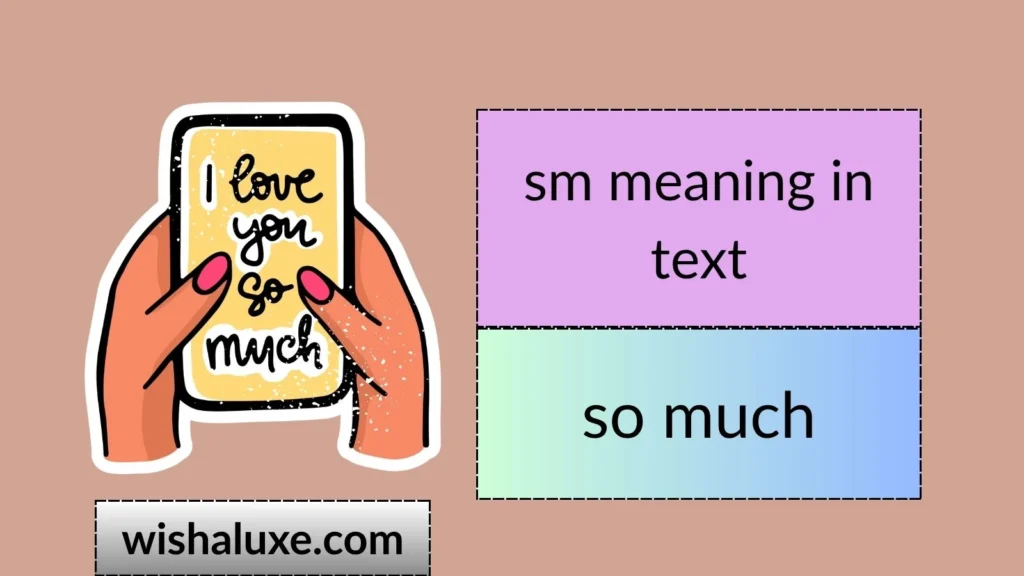
The abbreviation SM most commonly means “so much” in text messages and online conversations. People use it as a shorthand way to express a large amount of something without typing the entire phrase.
For example:
- “Thank you SM!” means “Thank you so much!”
- “I miss you SM.” means “I miss you so much.”
- “I love this song SM.” means “I love this song so much.”
In some situations, SM may also stand for:
- Social Media
- Sadomasochism (adult context)
- Small
- Service Mark
- Session Manager
- Story Mode (gaming)
The correct interpretation depends entirely on the conversation. In casual texting, “so much” is usually the most common meaning.
Because digital communication favors speed and convenience, abbreviations like SM help users communicate emotions and opinions more efficiently.
Background & History
The rise of abbreviations such as SM can be traced back to the early days of online messaging and mobile texting. During the late 1990s and early 2000s, text messages often had character limits, encouraging users to shorten words and phrases whenever possible.
Popular abbreviations like LOL, BRB, OMG, and IDK became widely accepted. As texting evolved, users continued creating shorter versions of common expressions. “So much” gradually became “SM” in many online communities.
The popularity of smartphones, social networking platforms, and instant messaging apps accelerated the use of shorthand language. Younger users especially embraced abbreviations because they allowed faster communication while maintaining the same meaning.
Today, SM appears across numerous platforms including social media comments, direct messages, group chats, gaming servers, and dating applications. While its exact origin is difficult to pinpoint, it emerged naturally from internet culture’s preference for concise communication.
The abbreviation remains popular because it saves time while still conveying strong emotions such as gratitude, affection, excitement, or appreciation.
Usage in Various Contexts
The meaning of SM changes depending on where it is used and who is using it.
Personal Text Messages
In everyday conversations, SM almost always means “so much.”
Examples:
- “Thanks SM for helping me.”
- “I appreciate you SM.”
- “I laughed SM at that video.”
Social Media
Users frequently include SM in comments and captions.
Examples:
- “Love this outfit SM.”
- “This made me smile SM.”
Gaming Communities
Gamers may use SM to refer to Story Mode or another game-specific term.
Example:
- “Have you completed SM yet?”
Business and Marketing
In professional environments, SM may stand for Social Media.
Example:
- “The SM team will manage the campaign.”
Technical Discussions
Technology professionals may use SM for software-related terms such as Session Manager or System Management.
The intended meaning usually becomes obvious when viewed within the larger conversation.
Common Misconceptions & Clarifications
Many people assume SM always has one definition, but that is not true.
One common misconception is that SM always means Social Media. While this interpretation is correct in marketing discussions, it is rarely the intended meaning in casual text messages.
Another misunderstanding occurs when readers interpret SM as an adult-related abbreviation. Although that meaning exists, it is generally limited to specific discussions and communities. Most everyday conversations use SM to mean “so much.”
Some users also confuse SM with similar abbreviations such as SN, SY, or SMH. These acronyms serve entirely different purposes and should not be treated as interchangeable.
When uncertainty exists, reading the surrounding text usually provides enough clues to determine the correct meaning. Context remains the most reliable way to interpret any abbreviation accurately.
Similar Terms & Alternatives
Many abbreviations serve a similar purpose to SM in online communication.
Common alternatives include:
- TYSM – Thank You So Much
- ILYSM – I Love You So Much
- TYSM – Thanks You So Much
- LOTS – Lots of love
- OMG – Oh My God
- TBH – To Be Honest
- IMO – In My Opinion
Some people choose to write the full phrase instead of using abbreviations, especially when they want their message to sound more sincere or professional.
For example:
- “Thank you so much” feels slightly more formal than “Thanks SM.”
- “I appreciate your help” sounds more professional than “I appreciate it SM.”
The choice often depends on the audience and communication style.
How to Respond to This Term
Responding to SM is usually simple because its meaning is often positive.
If someone says:
- “Thank you SM.”
You can reply:
- “You’re welcome!”
- “Happy to help.”
- “Anytime.”
If someone says:
- “I miss you SM.”
You might respond:
- “I miss you too.”
- “Can’t wait to see you.”
If the abbreviation seems unclear, politely ask for clarification.
Examples:
- “What do you mean by SM?”
- “Can you explain that abbreviation?”
Most people will gladly clarify their intended meaning.
Regional or Cultural Differences
The use of SM varies across countries, age groups, and online communities.
In English-speaking regions, younger users are more likely to recognize SM immediately as “so much.” Older individuals may be less familiar with internet slang and may need additional context.
Different online communities may also assign unique meanings to the abbreviation. A gamer, marketer, and software developer could each interpret SM differently based on their field of interest.
Cultural differences also influence how frequently abbreviations are used. Some regions prefer complete sentences, while others heavily embrace internet shorthand.
Despite these variations, “so much” remains one of the most widely recognized interpretations in casual communication.
Comparison with Similar Terms
Several abbreviations resemble SM but carry different meanings.
| Abbreviation | Meaning |
|---|---|
| SM | So Much |
| SMH | Shaking My Head |
| TYSM | Thank You So Much |
| ILYSM | I Love You So Much |
| IMO | In My Opinion |
| TBH | To Be Honest |
| IDK | I Don’t Know |
Understanding these differences helps avoid misunderstandings and improves digital communication skills.
Usage in Online Communities & Dating Apps
Online communities frequently use SM to express enthusiasm, affection, or appreciation.
Examples include:
- “Love this community SM.”
- “Your advice helped SM.”
On dating apps, users may use SM when expressing attraction or emotional interest.
Examples:
- “I enjoyed talking to you SM.”
- “You make me laugh SM.”
Because dating conversations often involve emotional expressions, the abbreviation naturally fits into these interactions.
However, context remains important because some users may use SM differently depending on their background and communication style.
Hidden or Offensive Meanings
Although SM is usually harmless, it can occasionally have alternative meanings.
In adult discussions, SM may refer to sadomasochism, a term associated with certain relationship preferences. This interpretation is generally limited to specific communities and is rarely intended in ordinary conversations.
Because of these alternative meanings, it is wise not to assume a definition without considering context. Most everyday text messages use SM innocently, but understanding less common interpretations can help prevent confusion.
Suitability for Professional Communication
SM is generally best suited for casual conversations rather than formal communication.
Appropriate situations include:
- Text messages
- Social media comments
- Informal chats
- Personal conversations
Less appropriate situations include:
- Business emails
- Professional reports
- Academic writing
- Formal presentations
In professional settings, writing the complete phrase usually creates a clearer and more polished impression. While abbreviations save time, full wording demonstrates professionalism and reduces the risk of misunderstandings.
Why People Use Abbreviations Like SM
Modern digital communication moves quickly, and users often prefer short forms over complete phrases. Abbreviations help save time, reduce typing effort, and make conversations feel more casual.
SM fits naturally into this trend because it allows people to express strong emotions or reactions with only two letters. Whether someone is thanking a friend or expressing excitement, the abbreviation makes communication faster while keeping the message clear.
Examples of SM in Everyday Conversations
Seeing real-world examples can make the meaning easier to understand. In casual chats, people often use SM when expressing appreciation, affection, or enthusiasm. For instance, a person might text, “I enjoyed the trip SM,” or “That movie was amazing SM.”
The abbreviation typically appears at the end of a sentence to emphasize a feeling without requiring additional words.
How Context Changes the Meaning of SM
One of the most interesting aspects of internet slang is that the same abbreviation can carry different meanings. The intended definition often depends on the topic being discussed.
A marketer may use SM to refer to social media, while a friend texting about a memorable experience may mean “so much.” Looking at surrounding words and the overall conversation usually reveals the correct interpretation.
The Role of SM in Modern Internet Culture
Internet culture thrives on speed, creativity, and evolving language. Abbreviations become popular because they help users communicate efficiently across different platforms. SM has become part of this digital vocabulary, especially among younger users who frequently interact through messaging apps, social networks, and online communities.
Its widespread use demonstrates how online language continues to adapt to changing communication habits.
Generational Differences in Understanding SM
Not everyone interprets internet abbreviations the same way. Younger generations who grew up with smartphones and social media generally recognize SM immediately. Older users may be less familiar with newer slang terms and could require additional context.
This difference highlights how digital language evolves over time and how familiarity often depends on a person’s online experience.
When It Is Better to Avoid Using SM
Although SM is widely understood in casual settings, it is not always the best choice. Formal emails, business correspondence, academic assignments, and professional documents typically benefit from complete words and phrases.
Using full language reduces ambiguity and creates a more polished impression, especially when communicating with people who may not be familiar with internet shorthand.
How Social Media Influences Slang Terms Like SM
Social media platforms have accelerated the spread of abbreviations and internet slang. A phrase that begins in one online community can quickly reach millions of users worldwide.
As people share posts, comments, and messages, abbreviations such as SM become part of everyday digital communication. This rapid spread helps explain why internet slang evolves much faster today than in previous decades.
Signs That SM Means Something Different
While “so much” is the most common interpretation, there are clues that may indicate another meaning. If the conversation involves marketing, business, technology, or specialized communities, SM may refer to something else entirely. Paying attention to the topic, audience, and surrounding terminology can prevent misunderstandings and help identify the intended definition.
The Future of Texting Abbreviations
Digital language continues to evolve as new platforms and communication styles emerge. Some abbreviations fade away, while others become permanent parts of online vocabulary.
SM has remained relevant because it serves a simple purpose and is easy to understand. As texting and social media continue to dominate communication, abbreviations like SM will likely remain common for years to come.
Tips for Understanding Unfamiliar Internet Slang
Encountering unknown abbreviations is a normal part of online communication. Rather than guessing, consider the context, review earlier messages, and look for clues within the conversation.
If the meaning remains unclear, asking for clarification is often the quickest solution. Developing this habit can help users navigate internet slang confidently and avoid unnecessary confusion.
FAQs:
What does SM mean in texting?
It most commonly means “so much.”
Is SM a positive abbreviation?
Usually yes. It often expresses appreciation, affection, or enthusiasm.
Can SM mean Social Media?
Yes. In marketing and business discussions, it often stands for Social Media.
Is SM used on dating apps?
Yes. People frequently use it to express strong feelings or interest.
Does SM have any adult meanings?
In certain contexts, it can refer to sadomasochism, but this is much less common in everyday texting.
Should I use SM in professional emails?
It is better to write the full phrase in professional communication.
Conclusion:
Understanding the SM meaning in text helps you interpret online conversations more accurately. While it most commonly stands for “so much,” the abbreviation can have several meanings depending on the situation.
Context plays the most important role in determining the correct interpretation. Whether you encounter it in text messages, social media posts, dating apps, gaming communities, or workplace discussions, recognizing its possible meanings can prevent confusion and improve communication.
As digital language continues to evolve, abbreviations like SM remain an important part of modern online interactions

Hi, I’m Alex Carry, the creator of Wishaluxe. I’m passionate about helping people find the perfect words for every special occasion, from birthdays and anniversaries to celebrations and heartfelt moments. Through Wishaluxe, I share creative ideas, meaningful messages, and inspiring content designed to make every occasion more memorable. My goal is simple: to help readers express their feelings with confidence and create lasting connections through thoughtful words.