If you spend time texting, using social media, or chatting on dating apps, you have probably come across the abbreviation FWB. Many people search for the meaning of this term because it often appears in conversations, online profiles, and casual discussions.
Understanding modern texting slang can help avoid confusion and ensure that messages are interpreted correctly.
FWB is one of the most commonly used internet abbreviations related to relationships and personal connections. However, its meaning can vary slightly depending on the context, the people involved, and the platform where it is used.
Some individuals use it casually, while others associate it with specific expectations about relationships.
This guide explains the meaning of FWB in text messages, its origins, common uses, misunderstandings, cultural differences, and whether it is appropriate in professional communication.
By the end, you will have a clear understanding of what FWB means and how to respond when you encounter it online or in conversation.
Definition & Meaning
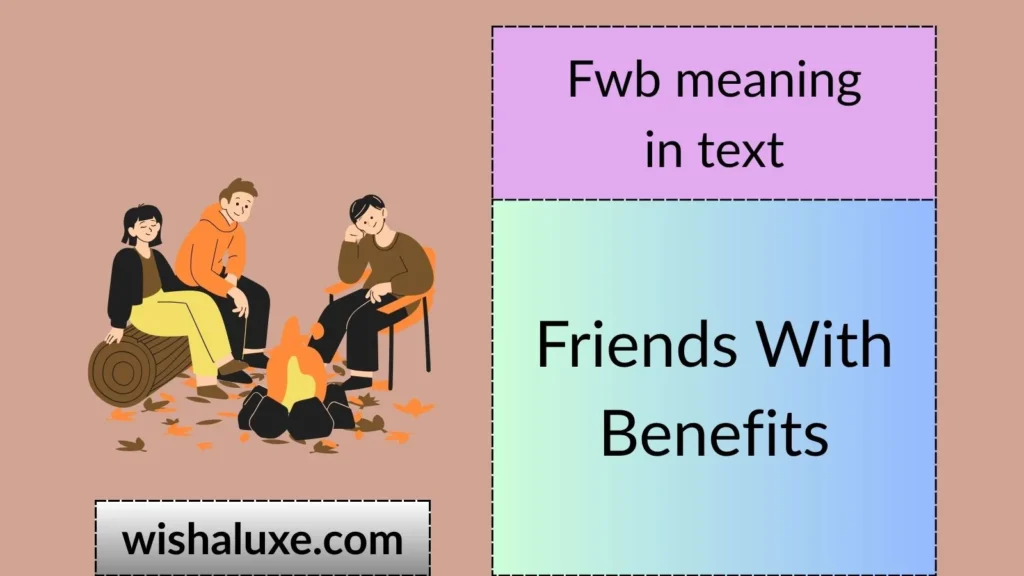
FWB stands for “Friends With Benefits.” In texting and online communication, it refers to a friendship that includes a physical or romantic aspect without the commitment typically associated with a traditional romantic relationship.
The phrase suggests that two people maintain a friendship while also sharing certain intimate experiences. Unlike a committed partnership, the arrangement is usually based on mutual understanding that the relationship remains casual.
When someone writes FWB in a text message, they may be:
- Describing their current relationship situation
- Looking for a casual connection
- Explaining the nature of a friendship
- Discussing relationship preferences
The exact meaning often depends on context. For example, a person may mention having an FWB arrangement, while another may ask whether someone is interested in that type of relationship.
Because the term is widely recognized online, it frequently appears in text messages, social media posts, forums, and dating applications. Understanding the context is important before making assumptions about what someone means.
Background & History
The concept behind Friends With Benefits existed long before texting and social media became popular. Throughout history, people have formed relationships that did not fit traditional categories of friendship or romance.
The phrase itself became more widely recognized during the late twentieth century and gained significant popularity in the early internet era. As online communication expanded, abbreviations became a convenient way to discuss personal relationships quickly.
Text messaging culture encouraged the use of short forms such as:
- LOL (Laugh Out Loud)
- BRB (Be Right Back)
- IMO (In My Opinion)
- FWB (Friends With Benefits)
The abbreviation became even more mainstream through movies, television shows, online forums, and dating platforms. As digital communication evolved, FWB transformed from a relatively niche expression into a widely understood relationship term.
Today, it is recognized across many English-speaking countries and is commonly used in both private conversations and public online discussions. Although the abbreviation remains popular, attitudes toward such arrangements can vary significantly among different cultures and age groups.
Usage in Various Contexts
FWB can appear in several types of conversations, and its meaning may slightly change depending on the situation.
Text Messages
In personal conversations, someone might write:
- “We’re just FWB.”
- “Are you looking for an FWB situation?”
These messages usually refer to a casual relationship arrangement.
Social Media
Users sometimes discuss experiences, opinions, or relationship advice involving FWB connections. The term is often used as shorthand because many readers already understand it.
Dating Apps
Dating platforms frequently contain profiles that mention relationship preferences. Some users openly state they are interested in an FWB arrangement rather than a long-term commitment.
Online Forums
Relationship and lifestyle forums often feature discussions about the advantages, challenges, and boundaries associated with FWB relationships.
Entertainment and Pop Culture
Movies, television series, podcasts, and articles regularly reference the term when discussing modern dating trends.
Because the abbreviation appears in so many places, understanding the context is essential before interpreting its meaning.
Common Misconceptions & Clarifications
Several misunderstandings surround the term FWB.
One common misconception is that an FWB arrangement automatically leads to a serious relationship. While this sometimes happens, many such arrangements are intended to remain casual.
Another misunderstanding is that all FWB relationships follow the same rules. In reality, boundaries and expectations vary greatly between individuals.
Some people also assume that friendship is unimportant in an FWB arrangement. However, the word “friends” indicates that a friendship often exists before or during the arrangement.
Additionally, many believe FWB means a lack of communication or respect. Healthy arrangements generally rely on honesty, mutual understanding, and clear expectations.
Clarifying intentions is often important because people may interpret the term differently based on personal experiences and cultural influences.
Similar Terms & Alternatives
Several expressions are related to FWB, although they are not always identical.
Casual Relationship
A non-committed romantic or physical connection.
Casual Dating
Seeing someone without necessarily pursuing a long-term commitment.
Hookup
Usually refers to a brief or occasional encounter rather than an ongoing friendship.
Situationship
A relationship that exists somewhere between friendship and a committed partnership.
No-Strings-Attached (NSA)
An arrangement where participants generally avoid emotional obligations or expectations.
Each term carries its own nuances, making context especially important when discussing relationship preferences.
How to Respond to This Term
When someone uses FWB in a conversation, your response should depend on your understanding and comfort level.
Possible responses include:
- Asking for clarification if you’re unsure what they mean.
- Politely expressing your relationship preferences.
- Setting personal boundaries.
- Continuing the conversation if you already understand the context.
Examples:
- Can you explain what you mean by FWB?
- “I’m looking for something more serious.”
- “I appreciate your honesty.”
Clear communication helps avoid misunderstandings and ensures everyone understands the situation.
Regional or Cultural Differences
Although FWB is widely recognized in many English-speaking countries, cultural attitudes toward the concept differ.
In some societies, casual relationships are discussed openly and accepted as a normal part of dating culture. In others, such arrangements may be viewed more conservatively.
Younger internet users often recognize the abbreviation immediately, while older individuals may be less familiar with it.
Language also plays a role. Even in countries where English is not the primary language, FWB is sometimes used online because internet slang frequently crosses cultural boundaries.
As a result, reactions to the term can vary significantly depending on age, location, culture, and personal beliefs.
Comparison with Similar Terms
Understanding the differences between FWB and related expressions can prevent confusion.
| Term | Main Meaning |
|---|---|
| FWB | Friends with a casual intimate connection |
| Dating | Romantic relationship with potential commitment |
| Hookup | Usually a brief encounter |
| Situationship | Undefined relationship status |
| NSA | Casual arrangement with minimal expectations |
While these terms overlap in some situations, they are not interchangeable. The specific expectations behind each relationship type can be very different.
Usage in Online Communities & Dating Apps
Online communities frequently discuss FWB arrangements because relationship dynamics are popular conversation topics.
On dating apps, users may include the abbreviation in profiles to communicate their preferences quickly. This helps others determine compatibility before starting a conversation.
Discussion forums often explore topics such as:
- Setting boundaries
- Managing expectations
- Maintaining friendships
- Avoiding misunderstandings
- Navigating emotional challenges
Because dating apps emphasize efficiency, abbreviations like FWB help users communicate relationship intentions without lengthy explanations.
Hidden or Offensive Meanings
In most cases, FWB has only one commonly understood meaning: Friends With Benefits.
However, context matters. Some individuals may find discussions involving FWB uncomfortable or inappropriate, particularly in formal environments.
The term itself is generally not considered offensive, but it can be viewed as sensitive depending on the audience, setting, or cultural background.
For this reason, it is wise to consider who you are speaking with before using the abbreviation.
Suitability for Professional Communication
FWB is generally not suitable for professional communication.
Workplace emails, business messages, academic discussions, and professional presentations typically require formal language. Since FWB relates to personal relationships, it may appear inappropriate in professional settings.
In business communication, it is best to avoid relationship slang and use clear, professional wording instead.
Using professional language helps maintain credibility and prevents misunderstandings among colleagues, clients, and supervisors.
Why People Use Abbreviations Like FWB
Text messaging has encouraged the use of abbreviations to make conversations faster and more convenient. Instead of typing long phrases, people often shorten common expressions into a few letters.
FWB became popular because it quickly communicates a specific type of relationship without requiring a lengthy explanation. Similar abbreviations have become part of everyday online communication, especially among younger users who frequently use messaging apps and social media platforms.
Signs Someone Is Using FWB Seriously
Not everyone uses relationship-related slang in the same way. Some people mention FWB casually as a joke, while others use it to describe a real situation. The seriousness often depends on the context of the conversation.
If someone discusses boundaries, expectations, or relationship preferences, they are likely using the term seriously. Understanding the tone and purpose behind the message can help avoid misunderstandings.
The Importance of Boundaries in FWB Arrangements
Clear boundaries are often considered one of the most important aspects of any FWB arrangement. Individuals may have different expectations regarding communication, exclusivity, and emotional involvement.
Discussing these expectations openly can help both parties understand each other’s intentions and reduce confusion later. Healthy communication is often a key factor in maintaining mutual respect.
Emotional Challenges Associated with FWB Relationships
Although many people enter these arrangements expecting them to remain casual, emotions can sometimes become complicated. One person may develop stronger feelings while the other continues viewing the relationship as casual.
This difference in expectations can create tension and misunderstandings. Recognizing potential emotional challenges helps people make informed decisions about their relationships.
How Social Media Influences Modern Relationship Terms
Social media platforms have played a major role in spreading abbreviations and relationship terminology. Terms that were once known only by small groups can quickly become mainstream through viral content, influencers, and online discussions.
As a result, phrases like FWB are now recognized by millions of internet users worldwide.
FWB in Movies, Television, and Popular Culture
Entertainment media has contributed significantly to the popularity of the term. Movies, television series, and streaming content often portray casual relationships and explore their advantages and complications.
These portrayals have helped introduce the phrase to broader audiences and made it part of modern relationship vocabulary.
When FWB Can Lead to Miscommunication
Miscommunication often occurs when two people interpret the arrangement differently. One individual may view it strictly as a friendship with benefits, while another may hope it develops into something more serious.
Open discussions about expectations can help prevent confusion and ensure both individuals understand the nature of the relationship.
How Different Age Groups View FWB
Perceptions of FWB can vary by generation. Younger adults who grew up with texting and social media may be more familiar with the term and its implications. Older generations may interpret it differently or be less familiar with internet slang altogether.
These differences can influence how the term is understood in conversations.
Privacy Considerations When Discussing FWB Online
Sharing personal relationship information online can have long-term consequences. Public posts, comments, and screenshots can remain accessible long after they are published. People should consider their privacy and the privacy of others before discussing sensitive relationship details on social media or public forums.
Can FWB Exist Without Friendship?
One debate often discussed online is whether genuine friendship is necessary for an FWB arrangement. Some believe a strong friendship is essential, while others use the term for casual connections that involve little emotional attachment.
This difference in interpretation is one reason why communication and clarity remain important.
Red Flags to Watch for in FWB Conversations
Certain behaviors may indicate potential problems, including unclear intentions, inconsistent communication, dishonesty, or a lack of respect for boundaries.
Paying attention to these warning signs can help individuals make better decisions and avoid unnecessary conflict.
The Future of Relationship Slang in Digital Communication
As technology continues to evolve, new relationship-related terms and abbreviations will likely emerge. Language constantly adapts to changing social trends, and internet slang reflects the way people communicate in the digital age.
FWB remains one of the most recognized examples of how modern relationships are discussed online.
Examples of FWB Used in Everyday Text Messages
Understanding practical examples can make the term easier to recognize in conversations. People might use it when discussing dating preferences, describing a current relationship, or asking questions about casual dating.
Examining common examples helps clarify how the abbreviation is typically used in real-world communication.
How FWB Differs From Traditional Relationships
Traditional relationships often involve exclusivity, long-term planning, and emotional commitment.
FWB arrangements are generally viewed as more casual and flexible. Comparing the two helps readers understand why the term exists and how it fits into modern dating culture.
Why Understanding Internet Slang Matters
Internet slang evolves quickly, and unfamiliar abbreviations can create confusion during conversations.
Learning common terms like FWB improves digital communication skills and helps people understand messages more accurately across social media, forums, dating apps, and text conversations.
FAQs:
What does FWB stand for in texting?
FWB stands for “Friends With Benefits,” referring to a friendship that includes a casual intimate relationship.
Is FWB the same as dating?
No. Dating often involves romantic commitment, while FWB is usually considered more casual.
Is FWB a common internet abbreviation?
Yes. It is widely used in text messages, social media, forums, and dating apps.
Can FWB become a serious relationship?
Sometimes. While many arrangements stay casual, some develop into committed relationships.
Is FWB appropriate for workplace communication?
No. It is generally considered too personal and informal for professional settings.
Why do people use FWB instead of writing the full phrase?
The abbreviation is shorter, faster to type, and widely recognized online.
Conclusion:
FWB is a popular internet abbreviation that stands for Friends With Benefits. It is commonly used in texting, social media, online communities, and dating apps to describe a friendship that includes a casual intimate aspect.
While the term is widely understood, its exact meaning can vary depending on context, expectations, and cultural perspectives. Understanding how FWB is used, the misconceptions surrounding it, and the appropriate situations for using the term can help you communicate more effectively and avoid misunderstandings in both online and offline conversations.

Hi, I’m Alex Carry, the creator of Wishaluxe. I’m passionate about helping people find the perfect words for every special occasion, from birthdays and anniversaries to celebrations and heartfelt moments. Through Wishaluxe, I share creative ideas, meaningful messages, and inspiring content designed to make every occasion more memorable. My goal is simple: to help readers express their feelings with confidence and create lasting connections through thoughtful words.