If you’ve spent any time texting, chatting on social media, or using messaging apps, you’ve probably come across the abbreviation WSP. Many people search for the meaning of this slang term because it appears frequently in casual conversations, online communities, and dating platforms.
Understanding modern texting abbreviations can help you communicate more effectively and avoid confusion when chatting with friends, acquaintances, or even potential romantic partners.
WSP is one of many short forms that have become popular due to the fast-paced nature of digital communication. Instead of typing complete phrases, users often rely on abbreviations to save time and keep conversations flowing naturally. While the term is simple, its meaning can vary slightly depending on context, tone, and platform.
In this guide, you’ll learn what WSP means in text, where it came from, how people use it, how to respond to it, and whether it is appropriate in different situations.
By the end, you’ll have a clear understanding of this commonly used internet abbreviation.
Definition & Meaning
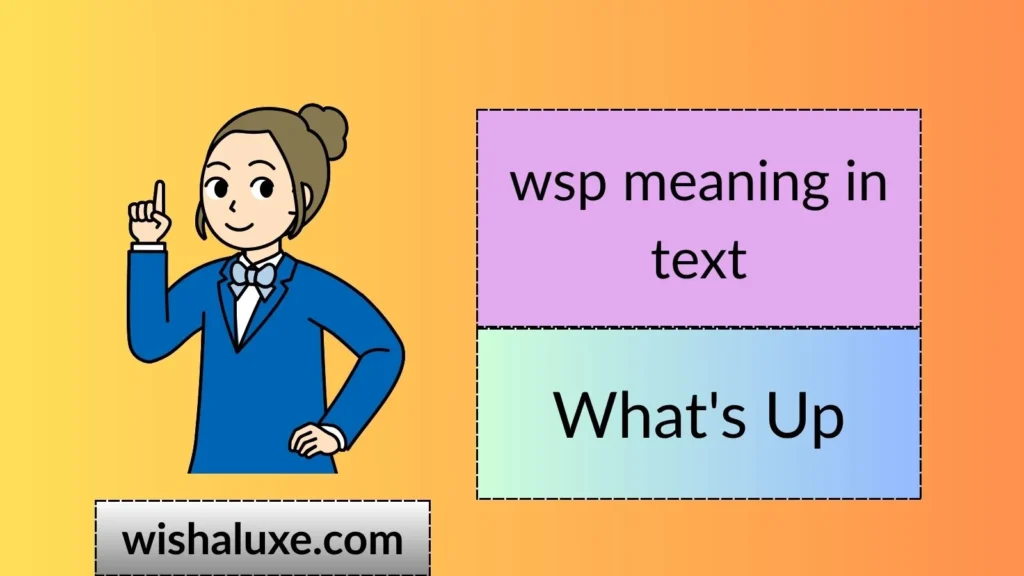
WSP is a texting abbreviation that most commonly stands for “What’s Up?” It is an informal way of greeting someone or starting a conversation. Rather than typing the full phrase, users shorten it to just three letters.
The expression is often used to:
- Say hello
- Check on someone
- Start a conversation
- Ask what someone is doing
- Show interest in chatting
For example:
- “WSP?”
- “Hey, WSP?”
- “WSP tonight?”
- “Yo, WSP bro?”
In most cases, the sender simply wants to know what is happening in your life at the moment. The phrase is similar to asking:
- How are you?
- What’s going on?
- What are you doing?
- Anything new?
The exact meaning depends on the conversation. Sometimes it serves as a casual greeting, while other times it is a genuine question seeking an update.
Because texting culture values speed and convenience, abbreviations like WSP have become common across smartphones, messaging apps, and social media platforms. Most younger internet users recognize it immediately, though people unfamiliar with texting slang may need clarification when they first encounter it.
Background & History
The rise of abbreviations like WSP can be traced back to the early days of online messaging. During the era of SMS texting, many mobile plans limited the number of characters users could send. This encouraged people to shorten words and phrases whenever possible.
As internet chat rooms, instant messaging services, and social networking platforms grew in popularity, abbreviated language became part of everyday communication. Users created countless shortcuts to communicate more efficiently.
The phrase “What’s Up?” itself has existed for decades as a casual greeting in spoken English. However, the abbreviated form WSP gained popularity through:
- Text messaging
- Internet chat rooms
- Online gaming
- Social media platforms
- Mobile messaging applications
Over time, digital communication evolved its own vocabulary. Abbreviations such as LOL, BRB, IMO, and WSP became widely recognized among internet users.
Today, WSP remains popular because it is simple, easy to type, and instantly understood by many people who regularly engage in online conversations. Its continued use demonstrates how digital culture shapes language and creates new communication habits.
Usage in Various Contexts
WSP can appear in many different situations depending on the relationship between the people communicating.
Friends
Among friends, it is often used as a casual greeting.
Example:
“Hey, WSP?”
This usually means the sender wants to chat or check in.
Family Members
Some family members use it informally, especially younger relatives.
Example:
“WSP cousin?”
Dating Conversations
People frequently use it to initiate contact with someone they like.
Example:
“WSP? How’s your day going?”
In this situation, it can be a conversation starter.
Gaming Communities
Online gamers often use WSP while joining chats or team discussions.
Example:
“WSP everyone?”
Social Media Messages
Direct messages often contain short greetings like WSP because they feel friendly and conversational.
The context generally determines whether the phrase is simply a greeting or an invitation for a longer discussion.
Common Misconceptions & Clarifications
Many people misunderstand WSP when they first encounter it. Here are some common misconceptions.
It Doesn’t Always Mean the Same Thing
Although it usually means “What’s Up?”, the tone can vary.
It Is Not Necessarily Flirtatious
Some users assume WSP is always used romantically. In reality, friends and acquaintances use it regularly.
It Is Not Formal English
WSP belongs to internet slang and should not be confused with standard written English.
It Is Not a Complex Acronym
Unlike some abbreviations that have multiple unrelated meanings, WSP generally refers to “What’s Up?” in texting environments.
Punctuation Changes Tone
1 “WSP?” sounds like a genuine question.
2 “WSP” may simply be a greeting.
3 “WSP!!!” can sound enthusiastic or excited.
Understanding context helps prevent misinterpretation.
Similar Terms & Alternatives
Many alternatives serve the same purpose as WSP.
Common examples include:
- Sup?
- Wassup?
- What’s good?
- Hey
- Yo
- How’s it going?
- What’s happening?
- What’s new?
- What’s going on?
- How are things?
Each variation carries a slightly different tone. Some sound more friendly, while others may feel more casual or regional.
Choosing the right expression depends on your audience and communication style.
How to Respond to This Term
Responding to WSP is usually straightforward because it functions as a casual greeting.
Examples include:
Simple Replies
- Not much, you?
- Just relaxing.
- Doing well. What about you?
- Nothing special.
Detailed Replies
- Just finished work. How about you?
- Watching a movie right now.
- Busy with school assignments.
Friendly Responses
- Hey! What’s up?
- Not much. What’s new with you?
Flirty Responses
- Better now that you’re texting me.
- Just thinking about you.
The best response depends on your relationship with the sender and the tone of the conversation.
Regional or Cultural Differences
The use of WSP can vary across regions and cultures.
In North America, it is widely recognized as a shortened version of “What’s Up?” In other English-speaking regions, people may understand it but use different local expressions more frequently.
Younger generations tend to recognize internet slang faster than older users. Social media exposure also influences familiarity with abbreviations.
Cultural context matters because some regions prefer more formal communication, while others embrace casual texting language.
Despite these differences, WSP generally carries the same friendly and informal meaning wherever it is used.
Comparison with Similar Terms
Understanding how WSP differs from similar expressions can help you use it correctly.
| Term | Meaning | Tone |
|---|---|---|
| WSP | What’s Up? | Casual |
| Sup | What’s Up? | Very Casual |
| Hey | Greeting | Neutral |
| Yo | Informal Greeting | Friendly |
| WYD | What Are You Doing? | More Specific |
| HRU | How Are You? | Personal |
| WYA | Where Are You? | Location-Focused |
Unlike WYD or WYA, WSP is broader and more open-ended. It can refer to a person’s activities, mood, or general situation.
Usage in Online Communities & Dating Apps
WSP appears frequently across digital platforms because it is quick and conversational.
Social Media
Users often send WSP to start direct message conversations.
Online Forums
Members may use it to engage with others informally.
Gaming Platforms
Gamers use it as a friendly greeting before discussing gameplay.
Dating Apps
On dating apps, WSP is commonly used as an opening message. It helps initiate conversation without sounding overly formal.
Examples:
- “WSP? How’s your day?”
- “Hey, WSP this weekend?”
- “WSP? Any fun plans?”
While effective, adding a personalized question usually creates more engaging conversations than sending only “WSP.”
Hidden or Offensive Meanings
In most situations, WSP has no offensive meaning. It is generally considered harmless internet slang.
However, context always matters online. Some niche communities may assign alternative meanings to abbreviations, but these uses are uncommon compared to the standard interpretation of “What’s Up?”
Before assuming an unusual meaning, it is usually safest to interpret WSP as a casual greeting.
If confusion exists, simply ask the sender for clarification.
Suitability for Professional Communication
WSP is not typically appropriate in professional settings.
Formal communication usually requires complete phrases and proper language.
Instead of using WSP, consider:
- Hello
- Good morning
- How are you?
- Hope you’re doing well
Using professional language helps maintain credibility and respect in workplace interactions.
WSP is best reserved for:
- Friends
- Family
- Social media conversations
- Casual chats
- Informal messaging
In business emails, professional networking, and workplace communication, avoiding slang is generally recommended.
Why People Prefer Short Texting Abbreviations
Modern messaging is built around speed and convenience. Abbreviations help users communicate quickly without typing full sentences. Explore how shortened expressions have become a normal part of everyday digital conversations and why they continue to grow in popularity.
Situations Where WSP Is Commonly Used
Discuss the most frequent scenarios where people send this abbreviation, including checking in with friends, starting conversations after a long time, and casually reaching out on social media.
The Tone Behind a WSP Message
The same message can sound friendly, curious, excited, or even lazy depending on how it is written. Explain how punctuation, emojis, and accompanying text influence the perceived tone.
How Teenagers Use WSP Differently From Adults
Different age groups often communicate in unique ways. Explore how younger users tend to rely more heavily on texting slang while older users may prefer complete phrases.
Social Media Platforms Where WSP Appears Most Often
Cover how the abbreviation is commonly found on messaging apps, social networks, gaming chats, and private conversations, along with examples of platform-specific usage.
Can WSP Start Meaningful Conversations?
Many people use it as a simple greeting, but it can also open the door to deeper discussions. Explain how a basic opener can lead to engaging and lasting conversations.
When Ignoring a WSP Message Might Be Appropriate
There are situations where responding immediately may not be necessary. Discuss circumstances such as spam messages, unknown contacts, or inactive online conversations.
The Psychology Behind Casual Digital Greetings
Explore why humans naturally seek connection through short greetings and how quick conversation starters satisfy social needs in the digital age.
How WSP Fits Into Modern Internet Culture
Internet culture constantly creates and spreads new expressions. Explain how abbreviated greetings contribute to online communication trends and digital identity.
Examples of WSP in Real-Life Conversations
Provide several practical examples showing how the abbreviation appears in everyday text exchanges between friends, classmates, coworkers, and romantic interests.
How Context Changes the Meaning of WSP
A message sent late at night may carry a different intention than one sent during the day. Discuss the importance of context when interpreting digital communication.
Common Reply Mistakes to Avoid
Many people struggle with responding naturally. Highlight awkward, overly formal, or one-word replies that may end a conversation prematurely.
Why Some People Dislike Texting Abbreviations
Not everyone appreciates internet slang. Examine concerns about clarity, professionalism, and communication quality among users who prefer traditional language.
The Evolution of Online Greetings Over Time
Compare older internet greetings with today’s popular abbreviations and show how digital communication habits have changed over the years.
How WSP Can Affect First Impressions Online
First messages often shape how people perceive one another. Discuss whether using casual slang creates a positive, neutral, or negative first impression.
Texting Etiquette When Using Casual Slang
Good communication still requires respect and awareness. Cover best practices for using abbreviations appropriately without appearing rude or uninterested.
Signs That Someone Wants More Than Casual Conversation
Sometimes a simple greeting serves as an invitation to continue chatting. Explain subtle clues that indicate the sender hopes for a longer interaction.
How Businesses and Brands View Texting Slang
Many companies use conversational marketing, but not all abbreviations fit a professional image. Explore how brands approach informal communication online.
Future Trends in Digital Language
Language evolves alongside technology. Discuss whether abbreviations like WSP are likely to remain popular or eventually be replaced by newer expressions.
What WSP Reveals About Modern Communication Habits
Conclude with a broader discussion of how texting shortcuts reflect changing communication preferences, shorter attention spans, and the influence of mobile technology on language.
FAQs:
What does WSP mean in text messages?
WSP usually means “What’s Up?” and is used as a casual greeting or conversation starter.
Is WSP the same as Sup?
Yes, both expressions generally mean “What’s Up?” although Sup is slightly more informal.
Can WSP be used on dating apps?
Yes, many users send WSP as an opening message to begin a conversation.
Is WSP considered rude?
No, it is typically viewed as friendly and casual when used appropriately.
Should I use WSP in professional emails?
No. Professional communication is better served by complete greetings and formal language.
Conclusion:
WSP is a popular texting abbreviation that stands for “What’s Up?” and serves as a quick, informal way to greet someone or start a conversation.
Its popularity stems from the convenience and speed of digital communication, making it common across text messages, social media platforms, gaming communities, and dating apps.
While simple, its meaning can vary slightly depending on context and tone. Understanding how to use and respond to WSP helps you communicate naturally in online conversations.
Although it works well in casual settings, it is generally not suitable for professional communication.
By recognizing its meaning, alternatives, and appropriate usage, you can confidently navigate modern texting culture and avoid misunderstandings in digital interactions.

Hi, I’m Alex Carry, the creator of Wishaluxe. I’m passionate about helping people find the perfect words for every special occasion, from birthdays and anniversaries to celebrations and heartfelt moments. Through Wishaluxe, I share creative ideas, meaningful messages, and inspiring content designed to make every occasion more memorable. My goal is simple: to help readers express their feelings with confidence and create lasting connections through thoughtful words.